The pitch that turned a Goldman Sachs banker into India’s digital entertainment mogul started with a complaint: there’s nothing to watch.
Not nothing on TV—there was plenty of that. But nothing was made for them. Nothing that felt like their lives, spoke their language, or fit into the five-minute gaps between work, commute, and scrolling.
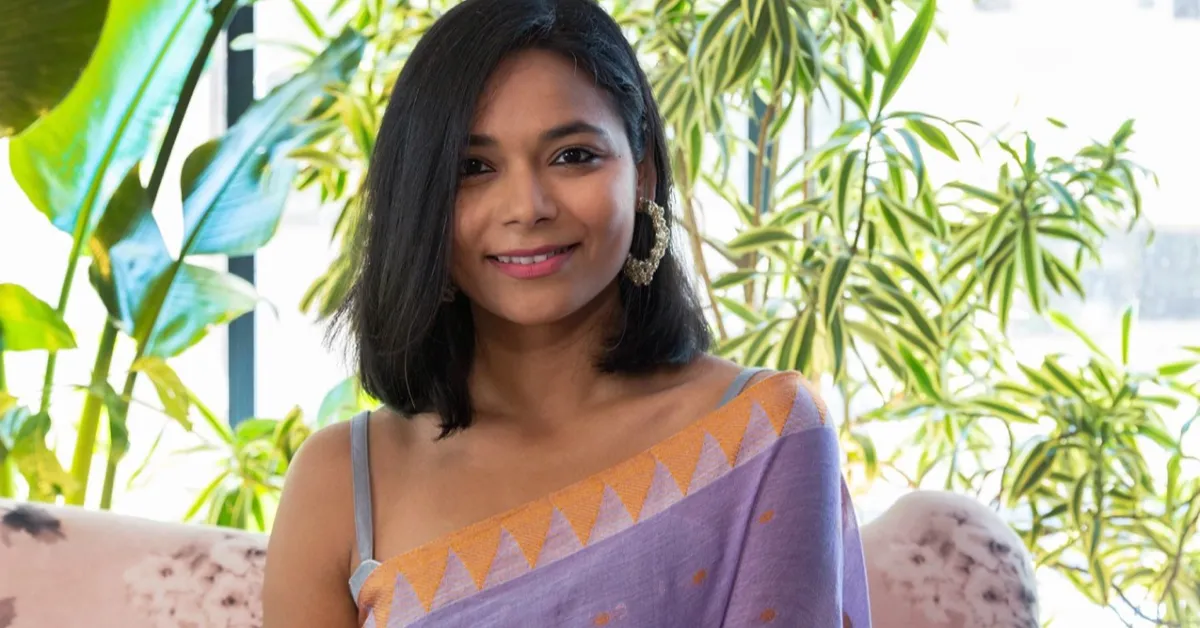
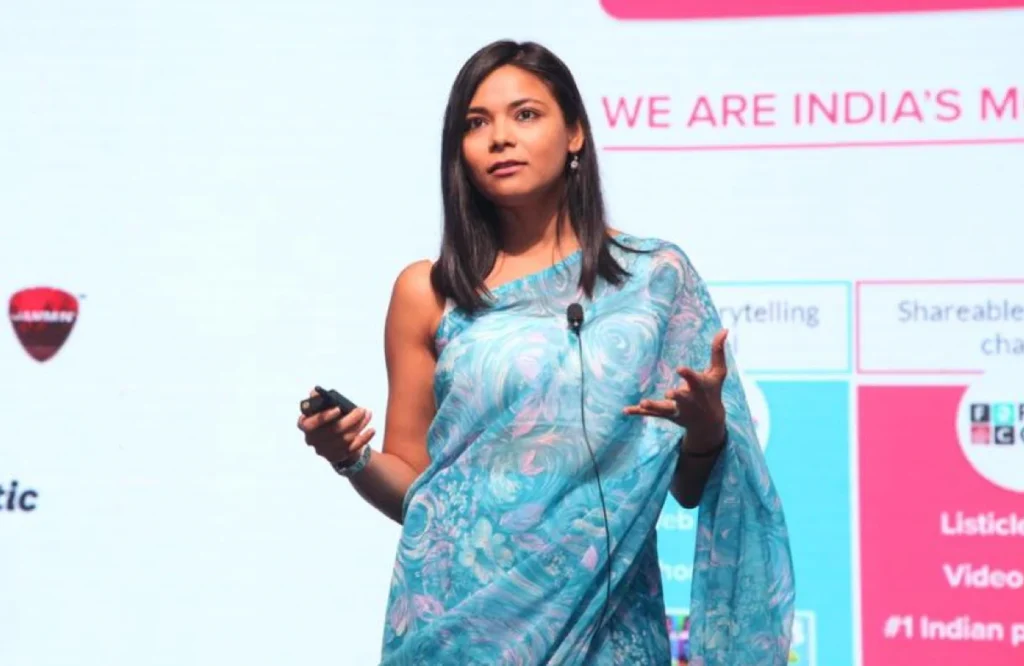
Aditi Shrivastava, co-founder and CEO of Pocket Aces, remembers that frustration well.

“The idea was that as consumers, we felt that there wasn’t enough content for us to watch,” she told Social Samosa. “So while TV, radio, etc, we’re catering to an older demographic, young people really, there was very limited content. Actually, Pocket Aces was born from that internal need. We needed more content for young people, by young people.”
That was 2013.
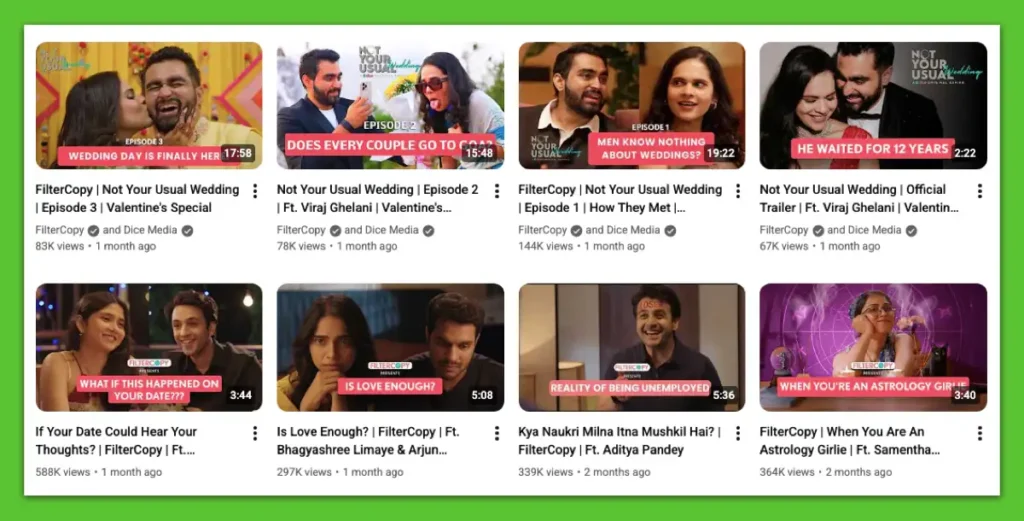
Today, that observation has turned into one of India’s most successful digital entertainment companies. Pocket Aces runs a portfolio of content brands—FilterCopy (10.7 million YouTube subscribers), Dice Media (5.43 million subscribers), Gobble, Nutshell, and Jambo—that collectively reach tens of millions of viewers every week. The company manages over 250 influencers under its Clout banner. And it’s just expanded into FAST (Free Ad-Supported Streaming TV) channels through a partnership with RunnTV.
But getting here? That path was anything but straightforward.
Trading Derivatives for Viral Videos: The Wall Street Origin Story
Shrivastava was born in Kuwait to Indian parents. She moved to the United States for college and graduated magna cum laude from Princeton University with a degree in electrical engineering and computer science—technical skills that would later prove surprisingly useful for understanding algorithms, audience data, and how platforms actually work.
Her first career was pure Wall Street. Five-plus years at Goldman Sachs doing quantitative equity research, trading, and portfolio management. Fast-paced. Analytical. Structured. It taught her how to read markets, manage risk, and make decisions when you don’t have all the information.
“These were our initial considerations,” she explained to Social Samosa. “We also recognized that many audiences were migrating to platforms like YouTube during this time. Consequently, we realized that we could bypass traditional distributors and financiers by creating content directly for social media platforms.”
After Goldman Sachs, she shifted gears completely. Shrivastava helped establish the Intellecap Impact Investment Network, which became one of the largest angel networks for impact-focused businesses in India and East Africa. She worked directly with early-stage entrepreneurs, advising on business models and scaling strategies. It was her first real taste of building companies from scratch—the chaos, the pivots, the exhilaration of startup life.
“Thus, we pivoted to producing short-form content as it was easily producible,” she added. “We could consistently release one video per week and distribute it organically. If audiences enjoyed our content, they would share it with their peers, fostering organic virality.”
Why No One Was Making Content for India’s Internet Users
By 2013, India’s internet landscape was changing fast. Smartphones were everywhere. Data was getting cheaper. YouTube, Facebook, and Instagram had become daily habits for young urban Indians.
But the content? That hadn’t caught up.
Shrivastava and her co-founders—Ashwin Suresh and Anirudh Pandita—saw the gap clearly. Traditional broadcasters were still chasing TRPs from family audiences. Bollywood made big-budget films for theaters. Digital video was either user-generated chaos or cheap TV knockoffs.
“We were outsiders; we hadn’t been part of an ad agency, nor had we studied media,” Shrivastava admits. “Admittedly, my co-founder Ashwin had some experience working with Lions Entertainment and Jungle Pictures, albeit for only a couple of years.”
Maybe that helped. Being outsiders meant they weren’t stuck in old thinking.
Pocket Aces set out to fill the void—not by copying TV onto phones, but by building content native to digital platforms. Short sketches for Instagram. Multi-episode web series made for YouTube binges. Formats optimized for social sharing, vertical video, and algorithmic distribution.
“In India, people crave information, but they prefer it in smaller, more digestible formats rather than lengthy articles,” Shrivastava explained about their approach. “This insight led us to launch Nutshell, our informational channel. Surprisingly, the most popular categories are geopolitics, Indian history, sex education, and entertainment news.”

“Indians, fundamentally, want to look and feel good. They seek entertainment, comedy, wellness content, beauty, fashion, grooming advice, and opportunities to become smarter and wealthier. Additionally, they desire to showcase their talents to the world. Hence, our talent and creative management endeavors.” She added
Pocket Aces wasn’t the only company that spotted this opportunity. The Viral Fever (TVF), Being Indian, and a wave of regional content studios were all going after the same audience. But Shrivastava believed the key was brand-building—not just viral hits.
FilterCopy became that brand. Relatable sketches about office life, relationships, and millennial anxieties. It struck a chord. Then Dice Media followed with longer series like Operation MBBS and What The Folks, proving that Pocket Aces was more than just a sketch comedy channel.
How Pocket Aces Survived When Everyone Else Went Viral and Died
Creating great content was one challenge. Building a sustainable business? That was another—a challenge familiar to many entrepreneurs building businesses from scratch in India’s competitive landscape.
India’s digital advertising market in the early 2010s was messy. Fragmented. Underpriced. And dominated by platforms that kept most of the revenue. YouTube views alone wouldn’t pay the bills. Pocket Aces needed multiple revenue streams.
So they diversified. Aggressively.
Brand integrations and sponsored content became core offerings. Pocket Aces created campaigns for everyone from Swiggy to Amazon Prime Video. Syndication deals put their content on OTT platforms, airlines, and international partners. The Clout talent management arm signed influencers and turned them into commercial entities. Later, they incubated Loco, a game streaming and esports platform that eventually spun off as its own business.
“Unlike other media companies and creators who primarily emphasized views, we focused on engagement and practical outcomes,” Shrivastava said. “We communicated how our content could drive traffic to their websites, facilitating product discovery, and outlined metrics for measuring success.”
That approach attracted serious money from various VCs, including Sequoia Capital (now Peak XV Partners), North Base Media, and 3one4 Capital – raising a total capital of around $19.8 million across multiple rounds.
Then in September 2023, legacy music label Saregama India acquired Pocket Aces for ₹174 crore ($20 million)—a strategic consolidation in India’s digital content sector.
The acquisition brought together Saregama’s massive music catalog with Pocket Aces’ digital-first content engine. A hybrid entertainment company built for India’s evolving media landscape.
When Digital Finally Beat Television: India’s $132 Billion Entertainment Gamble
Turns out, Shrivastava’s bet on digital-first entertainment was spot on.
India’s digital media market crossed 802 billion rupees ($9.6 billion) in 2024, overtaking television for the first time in two decades. Digital advertising alone hit roughly ₹700 billion, 55 percent of total advertising revenues. The broader media and entertainment industry reached 2.5 trillion rupees last year and is projected to hit 3.1 trillion rupees by 2027.
But it’s not just about scale. It’s about behavior.
Over 900 million Indians are expected to be online by 2025. Regional content now accounts for more than half of digital media consumption. Platforms are fragmenting. Audiences are splintering. The old mass-media playbook? Doesn’t work anymore.
Pocket Aces is adapting quickly. The recent partnership with RunnTV to launch FAST channels represents the company’s latest evolution—taking digital-native content back onto television screens, but delivered over the internet.
“FAST represents a significant opportunity to extend the lifecycle and reach of our large content and IP catalogue while tapping into the rapidly growing FAST and CTV audiences,” Shrivastava said in a press statement. “With our own channels plus the channels of 250+ influencers in our roster, our endeavour is to take diverse content formats, including short form, microdramas, web series, podcasts, and reality shows, to vast audiences across the country. This partnership with RunnTV allows us to do exactly this.”
It’s a full-circle moment: content made for phones, now streaming on connected TVs, powered by the same data-driven distribution strategies that made Pocket Aces successful on YouTube and Instagram.
From “35 Under 35” to Building India’s Next Media Giant
The recognition followed the results. Shrivastava has been named to Entrepreneur India’s 35 Under 35 list. Featured in multiple 40 Under 40 rankings. Listed among “Most Influential Women in Media and Advertising.” She’s participated in Stanford Graduate School of Business’s Seed Transformation Program—a signal that Pocket Aces is no longer seen as a scrappy creator shop but as a scaled media enterprise.
Her journey places her among India’s most inspiring women entrepreneurs, reshaping traditional industries.
But Shrivastava measures success differently than most media executives. Her brands have outlasted countless viral competitors. The business model has diversified beyond ad revenue dependence. The content library became valuable enough for legacy players like Saregama to acquire.
And the company’s founder—who traded quant models for audience data and financial derivatives for emotional narratives—has proven that Wall Street discipline and creator culture aren’t opposites. They’re complements.
What Happens When 1 Billion Indians Get Bored
India’s digital entertainment market is projected to reach $132 billion by 2035. That growth will bring more competition, more fragmentation, more complexity. Platforms will rise and fall. Algorithms will change. Audience preferences will shift.
Shrivastava isn’t worried.
“That’s when we put in place our motto—solving boredom and vowed to become available on all digital platforms,” she told Entrepreneur India.
It’s a philosophy shaped by her journey: from Kuwait to Princeton to Wall Street to Mumbai. From impact investing to entertainment. From analyzing markets to creating culture. The path wasn’t linear. But that’s precisely the point.
In India’s rapidly evolving media landscape—where traditional and digital are colliding and converging—non-linear paths might be exactly what’s needed. Aditi Shrivastava’s story isn’t just about building a successful company. It’s about how different experiences—engineering, finance, impact work, entrepreneurship—can combine into something entirely new.
For India’s hundreds of millions of young, mobile-first viewers, that combination solved boredom. For the country’s startup ecosystem, it’s a blueprint for how the next generation of media giants gets built.
And for one former Goldman Sachs banker? It’s proof that the best investments aren’t always made in markets—sometimes they’re made in understanding what people actually want to watch.