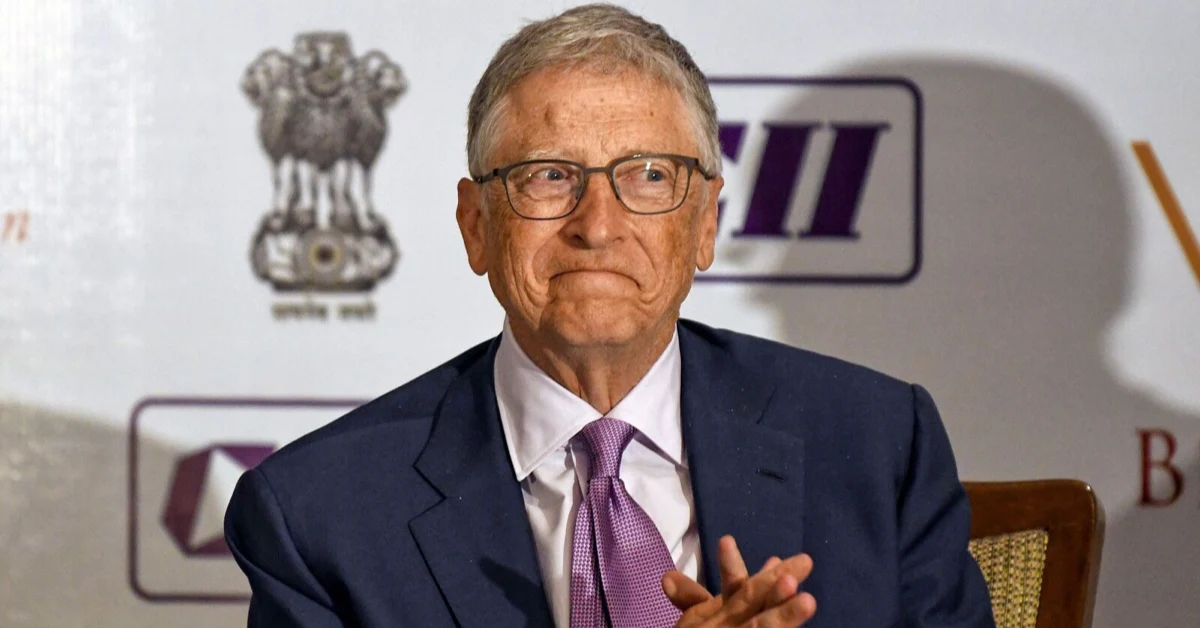
When Bill Gates cancelled his scheduled appearance at India’s major AI summit, the reaction online was immediate. Within hours, boycott calls began spreading across social media, viral posts claimed multiple countries were banning technologies linked to him, and past controversies resurfaced.
What might otherwise have been a routine event withdrawal quickly escalated into a global online storm — raising a central question: what actually triggered the sudden backlash against one of the world’s most influential technology philanthropists?
Here is what actually happened.
The cancelled India AI summit keynote
Gates had been expected to deliver a keynote at the India AI Impact Summit, a high-profile gathering focused on artificial-intelligence policy, governance and innovation.
The summit itself had already drawn headlines earlier in the week following a separate controversy involving an exhibitor, detailed in our report on the AI summit robodog incident.
Shortly before the event, organisers confirmed he would no longer attend, a change that quickly triggered speculation online, with some posts portraying the move as a forced cancellation or political fallout.
International reporting later noted that the withdrawal came amid renewed public scrutiny over Gates’ past association with convicted financier Jeffrey Epstein — an episode Gates has previously described as a serious mistake.
A detailed timeline of the decision and surrounding developments is documented in this international report.
No official statement suggested any Indian government restriction or ban on his participation.
How boycott calls spread online
Within hours of news of the cancelled appearance, social media posts began calling for a global boycott of Gates and organisations linked to him.
Some posts framed the summit withdrawal as evidence of mounting international rejection.
Others linked the controversy to unrelated policy debates, expanding the narrative beyond the event itself.
This rapid escalation followed a familiar online pattern:
- A high-profile cancellation creates uncertainty
- Old reputational controversies resurface
- Viral posts attach new claims to the story
- Boycott messaging spreads faster than verified reporting
The synthetic meat ban rumours
At the same time, widely shared posts claimed that Japan, China and South Korea had banned lab-grown or synthetic meat allegedly backed by Bill Gates investments.
The claims gained traction partly because Gates has funded alternative-protein and food-technology initiatives aimed at reducing emissions from livestock production.
However, independent fact-checking and international reporting found no confirmed trilateral ban targeting Gates-linked products — a claim examined in detail in this verification report.
Instead:
- Some countries are still developing regulatory frameworks
- Others allow research or limited approvals
- Policies differ by product category and safety review stage
There is no verified coordinated East Asian prohibition tied specifically to Gates.
Foundation signals continued India engagement
Amid the growing speculation, the India account of the Bill & Melinda Gates Foundation posted a public message emphasising ongoing work with Indian partners in healthcare, agriculture, sanitation, and digital infrastructure.
The communication did not directly address boycott calls but reaffirmed continued collaboration in the country.
Why the story exploded globally
Analysts say the speed of the reaction reflects a combination of structural factors that tend to amplify scrutiny around globally recognised technology figures.
1. Exceptional global visibility
Few business leaders combine corporate influence, philanthropic reach, and policy engagement at the same international scale, meaning developments involving Gates routinely draw worldwide attention.
2. Cross-sector involvement
From public health and agricultural development to climate initiatives and emerging technologies, Gates’ work spans multiple politically sensitive sectors, increasing the likelihood that developments in one area resonate across others.
3. Long-running public scrutiny
Gates’ past associations and high-profile public role have meant that new developments are often interpreted within an existing framework of public discussion and criticism, accelerating online response cycles.
4. Pandemic-era public attention
During the Covid-19 pandemic, Gates’ prominent involvement in vaccine funding and global health initiatives also placed him at the centre of sustained international debate and online scrutiny. Observers say that heightened public attention from that period means new developments involving him can often generate rapid and widespread reaction across social platforms.
When these factors combine with a high-profile event cancellation, analysts note, the result can be a rapid escalation from routine news into a broader global controversy.
Verified facts and unverified claims
Confirmed developments include Gates cancelling his scheduled appearance at the India AI Summit, followed by the emergence of online boycott campaigns and the rapid spread of claims regarding synthetic-meat restrictions.
However, there is no confirmed evidence of a coordinated East Asian ban specifically targeting Gates-linked investments, nor has any official Indian authority announced a prohibition on his participation.
The broader significance of the controversy
The episode shows how quickly the reputation of even the world’s most influential technology philanthropists can become entangled in a mix of real events, historical controversies, and fast-moving misinformation cycles.
As artificial intelligence policy becomes more geopolitically sensitive, and global public trust in major technology figures remains fragile – high-profile individuals such as Gates are likely to face increasingly volatile public reactions whenever major appearances change or multiple narratives converge online.