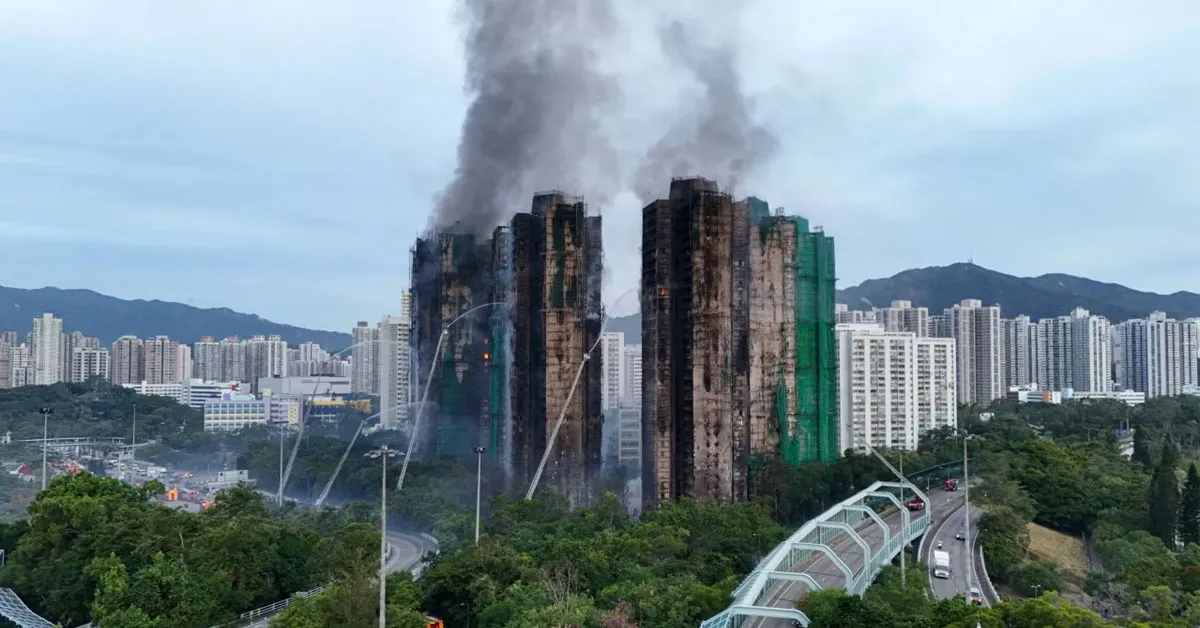
The death toll from the massive blaze that engulfed the Wang Fuk Court public housing estate in Tai Po has surged, marking one of Hong Kong’s deadliest residential disasters in recent decades. Authorities confirmed that the fire, which broke out on November 26, spread rapidly through scaffolding surrounding buildings under renovation, trapping residents and complicating rescue efforts.
In response, the Hong Kong government announced an HK$300 million relief fund, launching immediate support measures that include a HK$10,000 emergency cash subsidy for every affected household. Officials also outlined plans for approximately 1,800 transitional housing units to rehome displaced residents as recovery efforts continue.
Support rapidly expanded beyond government relief. Major corporations and charitable foundations mobilised millions in aid to assist victims. The Hong Kong Jockey Club committed HK$100 million through its Emergency Relief Fund, promising direct financial support to families of the deceased, medical assistance for the injured, and subsidies for temporary accommodation.
Prominent philanthropic organisations including the Li Ka Shing Foundation and the Lee Shau Kee Foundation pledged HK$30 million each for immediate relief. Leading financial institutions—among them HSBC, Hang Seng Bank, and Bank of China (Hong Kong)—also contributed tens of millions towards recovery, while extending service hours and setting up dedicated support hotlines for affected customers.
Grassroots community groups have played a critical role in the aftermath. Volunteers, NGOs, and local organisations mobilised within hours of the tragedy, operating temporary shelters, delivering essential supplies, and coordinating blood donations. Online platforms and community networks helped track missing residents and channel donations directly to victims.
Meanwhile, investigations into the cause of the fire intensified. Police have arrested individuals linked to the contractor overseeing the building renovations, with early findings pointing to flammable scaffolding materials and inadequate safety measures as contributing factors to the rapid spread of the blaze. The incident has reignited debate over construction safety standards, particularly the use of bamboo scaffolding in large-scale residential projects.
Government officials have announced citywide inspections of similar estates undergoing renovation, signalling potential reforms in building safety regulations and enforcement.
As emergency operations transition into long-term recovery, authorities and aid organisations face mounting pressure to ensure displaced families receive sufficient housing, financial support, and psychological care. The tragedy continues to spark citywide reflection on safety oversight and the resilience of Hong Kong’s public housing infrastructure.
Editor’s Note: Details and casualty figures may evolve as rescue teams continue identification and final assessments at the scene.