A patient in a smaller Indian city may complete a CT scan in minutes — but the report can sometimes take days to arrive. In regions where radiologists are scarce, doctors often have to wait for specialists in larger cities to review medical images before making treatment decisions.
For conditions like cancer, neurological disorders, or traumatic injuries, those delays can mean the difference between early intervention and worsening health outcomes.
Three founders believed artificial intelligence could help close that gap.

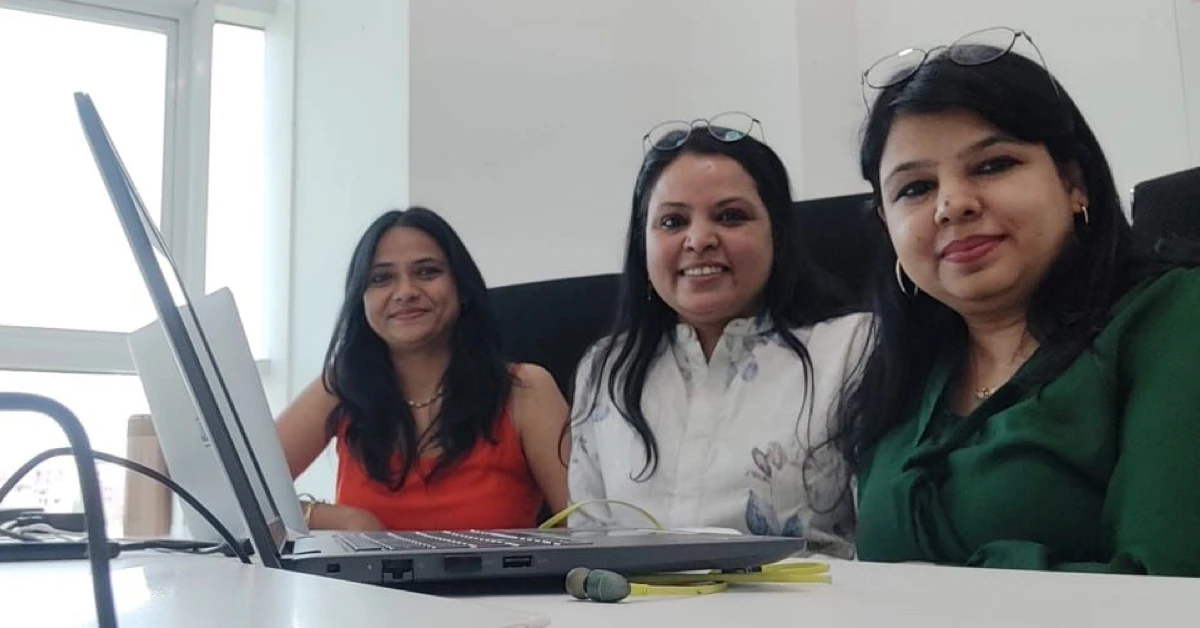
In 2022, Meenal Gupta, Noor Fatma, and Sheetal Tarkas launched Easiofy Solutions, a healthtech startup focused on improving medical imaging workflows through AI. Their platform, ImagiXAI, is designed to help hospitals analyse diagnostic scans faster, enabling doctors to detect diseases earlier and plan treatments more efficiently.
Today, the company’s technology processes more than 1,000 medical scans per day across more than 12 Indian states, supporting hospitals, diagnostic centres, and teleradiology providers in regions where specialist expertise is often scarce.
Easiofy Growth Snapshot
| 2022 — Founded | Easiofy Solutions launched by Meenal Gupta, Noor Fatma and Sheetal Tarkas to build AI-powered imaging tools. |
| Early Stage Support | Bootstrapped with an initial ₹7 lakh innovation grant used to develop the first prototype of the ImagiXAI platform. |
| Technology Development | Launch of ImagiXAI, a cloud-based platform capable of analysing X-rays, CT scans and MRI data. |
| Ecosystem Recognition | Supported by MeitY Startup Hub under the SAMRIDH scheme and received ₹25 lakh support from FITT IIT Delhi. |
| 2024–2025 Traction | Deployment across multiple hospitals and diagnostic centres with pilots including healthcare institutions such as AIIMS Bhopal. |
| Current Scale | More than 1,000 scans processed daily across 12+ Indian states. |
A Vision Born From Real Gaps in Healthcare
The founders came from different professional backgrounds but shared a common observation: India’s healthcare system still struggles with unequal access to diagnostic expertise.
Meenal Gupta had experience in imaging systems and enterprise technology, Noor Fatma specialised in artificial intelligence and software development, and Sheetal Tarkas brought operational and media industry experience. Through their respective careers, they witnessed how delays in diagnostic interpretation could affect patient care.
In India’s large metropolitan hospitals, diagnostic scans can usually be reviewed quickly by experienced radiologists. But in Tier 2 and Tier 3 cities, the situation is often different. Hospitals may not have enough specialists available to analyse imaging data promptly.
Recognising this structural gap, the founders set out to build a platform that could act as a technological layer between medical imaging devices and doctors—using artificial intelligence to assist in interpreting scans and preparing treatment insights.
Their goal was not to replace doctors, but to augment their capabilities.
Building ImagiXAI
The result was ImagiXAI, a cloud-based medical imaging intelligence platform designed to simplify how diagnostic images are stored, shared, and analysed.
The platform supports analysis of multiple imaging formats including X-rays, CT scans, and MRI data. Its AI-powered tools can assist with tasks such as early anomaly detection, radiation therapy contouring, and generating three-dimensional visualisations that help surgeons plan procedures more precisely.
One of the system’s capabilities includes automated cranial implant design, which can assist doctors during reconstructive procedures by creating precise anatomical models derived from scan data.
For hospitals and diagnostic labs, the platform also offers collaborative features that allow technicians, radiologists, and surgeons to access imaging data through a unified digital environment.
Because the infrastructure is cloud-based, healthcare providers can access the platform even in facilities with limited on-premise computing resources.
Positioning its technology as a way to augment rather than replace clinicians, Easiofy emphasised the role of AI in freeing doctors from repetitive tasks:
“AI contouring isn’t about replacing oncologists — it’s about unleashing them.” the company said
Reducing the Hidden Workload in Cancer Care
One of the key clinical challenges Easiofy aims to address lies in the workflow of radiation oncology, where specialists often spend hours manually outlining organs and tumor boundaries in medical scans before treatment planning can begin.
This process, known as contouring, is an essential step in radiation therapy planning. However, it is also highly time-consuming, requiring experienced oncologists to manually trace organs and tissues across dozens of imaging slices.
In many hospitals, this means that senior doctors can spend a large portion of their week performing repetitive contouring tasks instead of focusing on treatment decisions or patient consultations.
Easiofy’s ImagiXAI platform uses artificial intelligence to automate much of this process. By identifying organs-at-risk and anatomical structures within CT scans and other imaging formats, the system can generate contours in minutes, significantly reducing manual effort.
“Imagine your most experienced radiation oncologist spends 60% of their week manually tracing organs — that’s 24 hours of clinical expertise clicking pixels.” said the company in a LinkedIn post
The company says this allows oncology teams to review more treatment plans, shorten the time between diagnosis and therapy, and free specialists to focus on complex clinical decisions that still require human expertise.
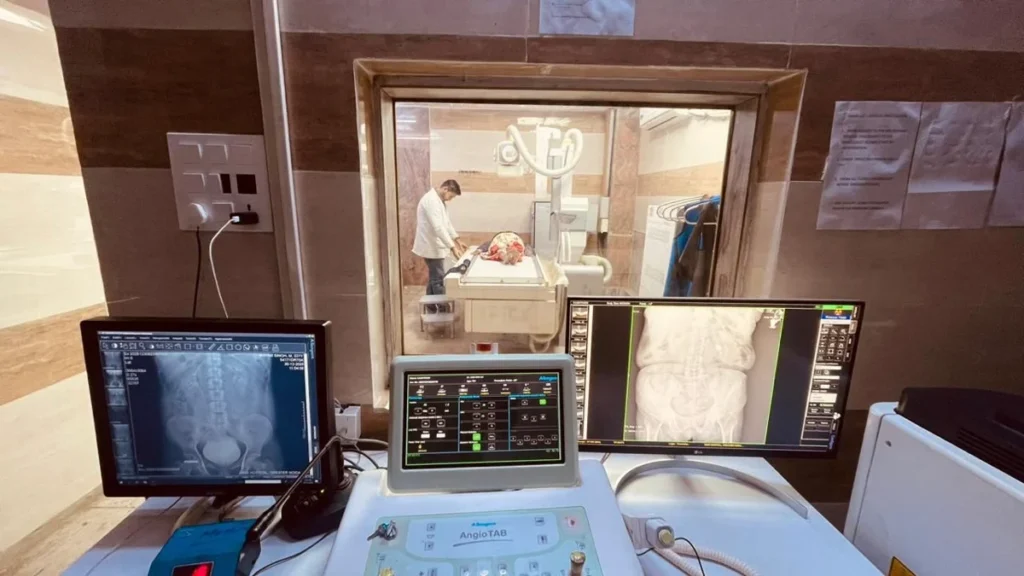
In a recent LinkedIn post, Easiofy described how high-volume oncology centres often operate under a fragile equation: exceptional medical talent combined with limited time. Automating routine imaging tasks, the company argues, can help ensure that experienced doctors spend more time treating patients rather than performing manual data preparation.
“One major cancer center told us: ‘We didn’t realize we were using Ferrari-level talent for delivery truck work,’” the company said in the LinkedIn post discussing oncology workflows.
Designed for India’s Healthcare Reality
From the beginning, Easiofy’s founders designed the platform with India’s healthcare constraints in mind.
Many smaller hospitals face bandwidth limitations, fragmented infrastructure, and limited budgets for advanced diagnostic software. To address this, the company built a lightweight system that can operate in relatively low-bandwidth environments.
The company operates on a software-as-a-service model, charging hospitals on a per-study basis. Pricing ranges from around ₹100 to ₹3,000 per scan depending on the complexity of the analysis.
This model allows hospitals to adopt AI-assisted diagnostics without the need for large upfront investments.
Over time, Easiofy has expanded its reach across multiple states, working with government and private hospitals, diagnostic labs, and telemedicine networks.
Some of its deployments include healthcare initiatives in Madhya Pradesh, where the platform has been used in 5G-enabled medical environments. Pilot programs are also underway with major healthcare institutions as the company continues to refine its technology.
Navigating Challenges on the Ground
Like many healthcare startups, Easiofy’s journey has not been without obstacles.
Introducing new technologies into hospital workflows often requires extensive training and trust-building with medical staff. In some regions, bureaucratic procedures and procurement cycles can also slow adoption.
The founders say they approached these challenges by working closely with healthcare providers and adapting the technology based on feedback from doctors and technicians.
Instead of pushing a purely technology-driven product, the team focused on creating tools that integrate naturally into existing clinical workflows.
The approach helped them gradually build credibility among hospitals and healthcare professionals who were initially cautious about AI-assisted diagnostics.
Support From India’s Startup Ecosystem
In the early days, Easiofy began with modest financial support. The startup initially bootstrapped with an innovation grant of ₹7 lakh, which helped the team build early prototypes of their imaging platform.
As the product matured, the company received additional support from several innovation and startup programs.
The startup has also received support under the MeitY Startup Hub’s SAMRIDH initiative, a government program designed to help technology startups scale their products and reach new markets.
It has also received support from the Foundation for Innovation and Technology Transfer at IIT Delhi, which provided ₹25 lakh in funding assistance.
These initiatives helped the founders expand development, conduct pilot deployments, and accelerate the platform’s adoption across healthcare institutions.
Recognition and Growing Momentum
As Easiofy’s deployments expanded across multiple states, the startup began attracting attention from the broader technology and healthcare innovation ecosystem.
Its work in AI-assisted medical imaging has been showcased at major technology platforms including India Mobile Congress (IMC) 2024 and global AI for Good showcases that highlight artificial intelligence solutions addressing real-world challenges.
At India Mobile Congress 2024, held in New Delhi, Easiofy presented its AI-powered imaging platform alongside other deep-tech startups building solutions for sectors such as healthcare, telecom, and digital infrastructure.
During the event, Prime Minister Narendra Modi visited the startup exhibition area and interacted with innovators demonstrating emerging technologies. Easiofy founder and CEO Meenal Gupta was among the entrepreneurs presenting AI-driven healthcare solutions aimed at improving diagnostic efficiency in hospitals and medical centers.
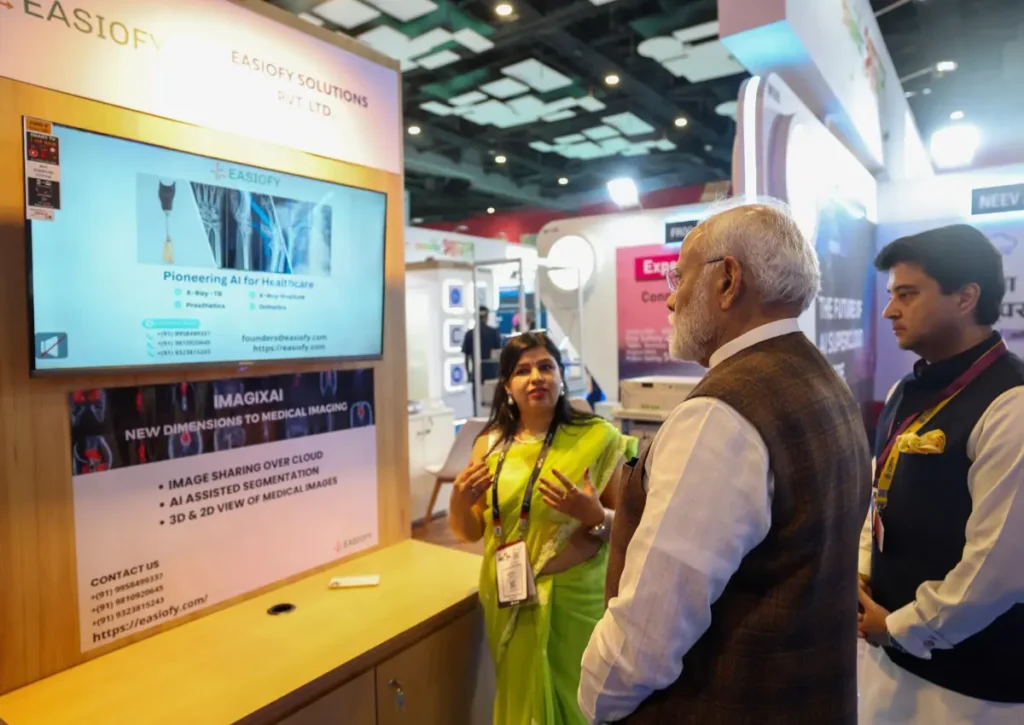
The interaction reflected the growing national focus on artificial intelligence and deep-tech innovation as India works to strengthen digital infrastructure and healthcare delivery.
The startup has also begun attracting attention from global technology circles. In a recent LinkedIn post, Easiofy said it was invited to the Microsoft office in Noida to present its AI-powered healthcare platform, where the team had an opportunity to share its vision for AI-driven clinical workflows with Microsoft co-founder Bill Gates.
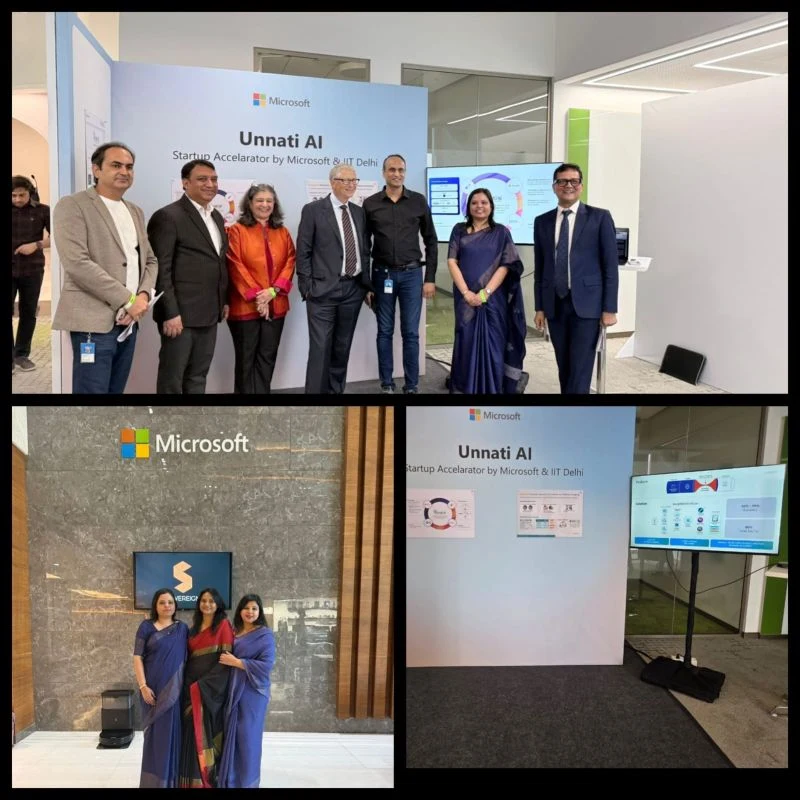
In 2025, Easiofy also received recognition in the Startup Maharathi Challenge, further highlighting its position within India’s emerging deep-tech startup ecosystem and the increasing visibility of AI-powered healthcare solutions built in India.
Looking Ahead
Easiofy has raised around ₹1.8 crore in funding so far and is now focused on expanding its footprint across hospitals and diagnostic networks.
In the near term, the company plans to grow its presence to at least 50 hospitals while working toward international regulatory certifications such as CE and FDA approvals.
Beyond India, the founders see potential demand for AI-assisted diagnostic tools across Southeast Asia and parts of Africa, where healthcare systems face similar shortages of radiology expertise.
Over the long term, Easiofy aims to position its technology as a standard AI layer that can integrate directly with imaging equipment manufacturers and healthcare systems.
For the founders, however, the core mission remains unchanged: ensuring that a patient’s location does not determine the quality of diagnostic care they receive.
If artificial intelligence can help doctors analyse scans faster and plan treatments earlier, they believe it could play a meaningful role in closing some of the long-standing gaps in healthcare access.