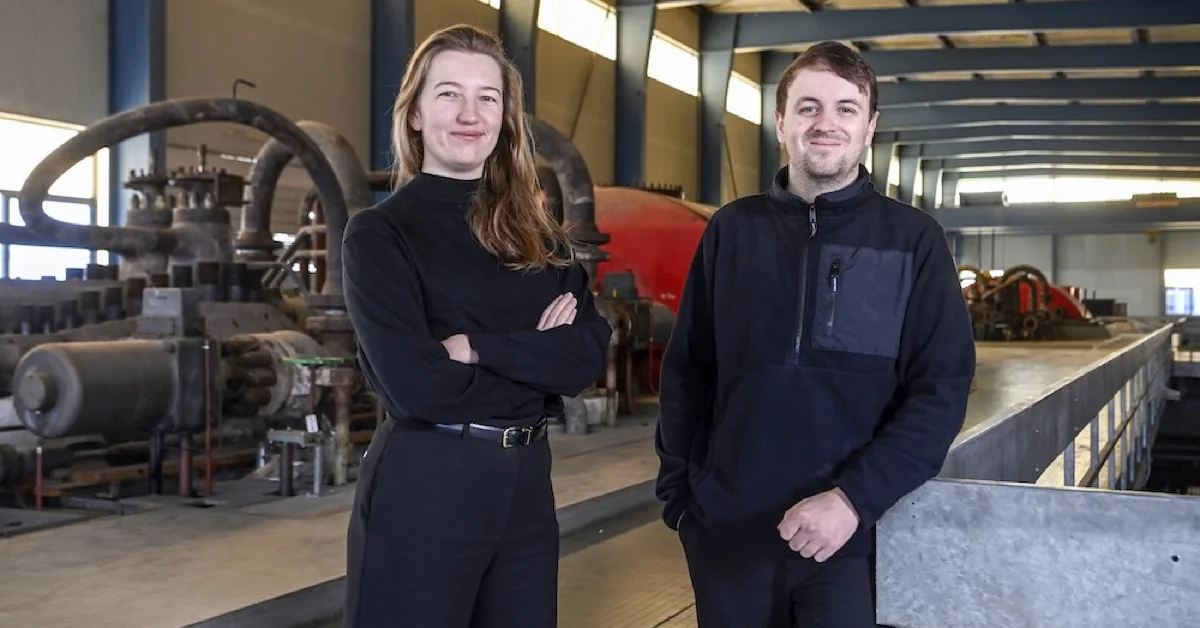
Getting a satellite into orbit is the part of the space industry most people think about. What happens after launch — the slow, expensive, months-long crawl from where a rocket drops a satellite to where it actually needs to be — tends not to make headlines. That gap is what the Lausanne, Switzerland-based PAVE Space is building to fix, and investors just handed it $40 million in seed funding to do it.
The round was led by Visionaries Club and Creandum, with participation from Lombard Odier Investment Managers, Atlantic Labs, Sistafund, b2venture, ACE Investment Partners, Ilavska Vuillermoz Capital, Pareto Ventures, and Motier Ventures. It is one of the largest seed rounds ever closed in the European space sector. PAVE had raised roughly $2 million before this. The jump is significant by any measure — and the company is less than two years old.
The problem no one talks about
Here is how satellite deployment actually works today. A launch vehicle — a SpaceX Falcon 9, an Ariane 6, whatever is cheapest and available — delivers a payload to low Earth orbit because LEO is accessible and affordable. But most commercially useful satellites operate at much higher altitudes: geostationary orbit for communications, medium Earth orbit for navigation, sometimes even cislunar trajectories for defence and science missions.
The gap between where rockets drop satellites and where those satellites actually work is bridged, currently, by onboard electric propulsion. It is quiet, efficient, and extremely slow. The journey from LEO to GEO can take six to twelve months. During that time, the satellite is not serving customers, not generating revenue, and sitting exposed to debris and interference in a congested transit orbit.
For commercial satellite operators, that delay is a financial problem. For defence customers, it is something more acute — the ability to rapidly reposition an asset in response to a developing threat is a capability that months-long electric orbit-raising simply cannot provide.
What PAVE is actually building
PAVE Space is building a fleet of orbital transfer vehicles — spacecraft whose sole job is to pick up satellites from LEO and deliver them to their working orbits quickly. Its flagship vehicle, LYOBA, is a heavy-lift kick-stage engine capable of hauling payloads up to five tonnes into MEO, GEO, or trans-lunar injection orbit. A second, smaller platform called IBEX is designed for rapid satellite repositioning — the kind of agile, short-notice manoeuvring that defence customers require.
The propulsion approach matters. Most orbital transfer concepts rely on cryogenic fuels, which evaporate at room temperature and make extended loitering in orbit impractical. PAVE uses storable bipropellants instead — they can sit in a tank for months without degrading, which makes them far better suited to the realities of in-space operations. The company argues that this choice, combined with its kick-stage architecture, can cut the cost of reaching GEO by around 40% by allowing operators to launch on cheaper LEO rideshares and let PAVE handle the rest.
The infrastructure is designed to be launcher-agnostic — compatible with whatever rocket an operator has already booked, rather than tied to any specific launch provider. That matters in a market where launch capacity is increasingly commoditised.
“The space economy is entering an industrial phase where logistics will become as critical in orbit as they are on Earth,” said Julie Böhning, CEO and Co-Founder of PAVE Space. “Our ambition is to build the infrastructure that allows industries to move, operate and scale beyond Earth – while ensuring Europe retains sovereign capabilities in this next strategic domain.”
From student rocket to $40 million seed
PAVE Space was founded in Lausanne in 2024 by Julie Böhning and Jérémy Marciacq, alongside Simon Both — the same three engineers who, as students at EPFL, built and ran the Gruyère Space Program from November 2018. The GSP was a student association with one stated goal: design, build, and fly a reusable, vertically-landing liquid-propellant rocket on a student budget.
They did it. Their demonstrator, Colibri — a 2.45-metre bipropellant VTVL rocket — completed 53 flights, including a 105-metre free flight, on approximately CHF 250,000 in total sponsorship funding. It was the first reusable VTVL rocket ever built and flown by a student team in Europe. When the programme concluded in 2024, the three founders spun the technology and the hard-won engineering experience directly into PAVE.
That origin story is more than a nice detail. The GSP’s defining constraint — building real hardware, flying it repeatedly, and learning from failures on almost no money — shaped an engineering philosophy that PAVE has carried into the company. It develops propulsion systems, avionics, control algorithms, and structural design entirely in-house, keeping the full vehicle stack under its own control and iterating quickly through real-world testing.
Also Read: Space Tech startup Pixxel Raises Fresh $24 Mn in Ongoing Series-B Funding Round
What the $40 million is for
The funding is earmarked for a specific set of milestones. Before the end of 2026, PAVE plans a hotfire test of its kick-stage engine. In October, an in-space demonstration of its avionics system is scheduled to fly on SpaceX‘s Transporter-18 rideshare mission. Next year, the company expects to complete qualification of its in-space mobility platform and move toward a first full launch. A new EU office is also planned, alongside expanded hiring across propulsion engineering, avionics, mission design, and commercial functions.
The company has already secured early reservation agreements with satellite operators — it has not disclosed names — which gives it at least some commercial footing ahead of a hardware demonstration that remains months away.
The competitive picture
PAVE is not operating in an empty field. Orbit Fab is building in-space refuelling infrastructure. D-Orbit offers hosted payload and ride-sharing services. Exotrail develops electric propulsion for small satellites. Each addresses a related part of the in-space logistics problem from a different angle.
What PAVE is staking its claim on is the European sovereignty angle — the absence of an independent European orbital logistics provider capable of moving satellites without reliance on non-European infrastructure. Bloomberg noted this framing explicitly when covering the round, describing the raise as part of Europe’s broader push to reduce dependence on US space access. Given the current geopolitical climate around space and defence, that positioning has real investor appeal — and real commercial rationale for the defence customers PAVE is targeting with its IBEX platform.
Whether a two-year-old startup can build credible orbital logistics infrastructure before the window closes is the question the next 18 months of hardware testing will answer. The founders built 53 rockets on CHF 250,000. They now have $40 million and a launch slot in October. The trajectory, at least, is pointed upward.