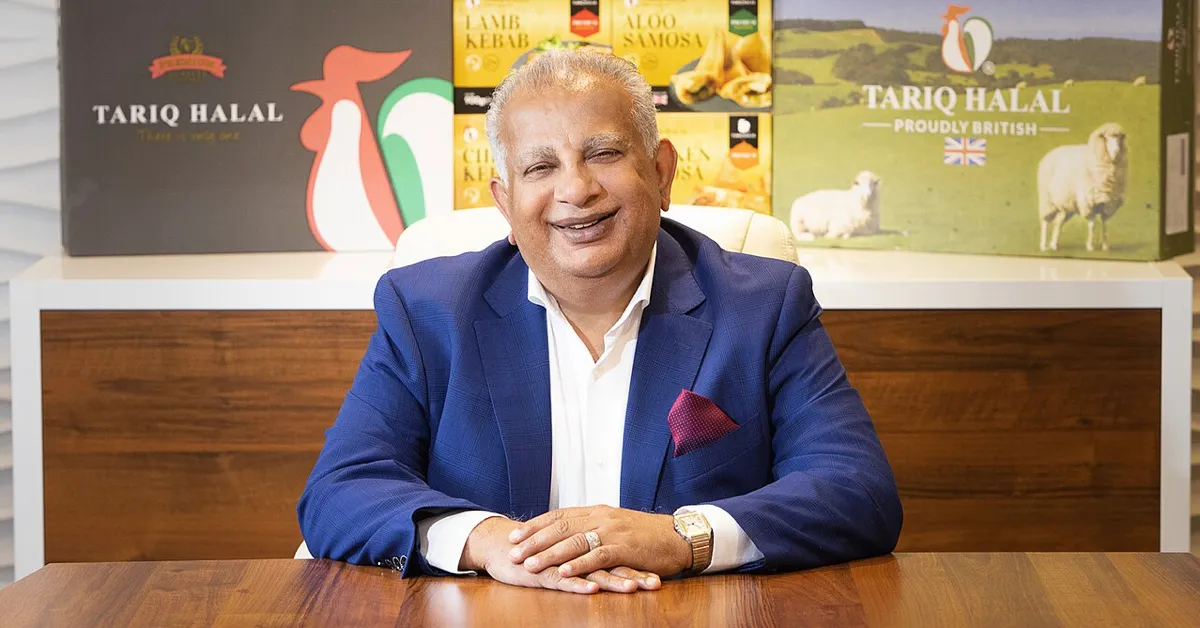
More than 300 Sainsbury’s stores across the United Kingdom carry Tariq Halal Meats products. That number — unremarkable on the surface — represents something the British halal food sector had spent decades trying to achieve: mainstream shelf space, at scale, on its own terms. Behind it is Tariq Sheikh, a British-Pakistani entrepreneur who arrived in the UK at age four and has spent the past three decades building Tariq Halal Meats into the country’s most recognisable halal food brand.
The story of Tariq Halal Meats is, at its core, a story about market failure and the discipline required to fix it. When Sheikh founded the company in Southall in 1994, the halal butchery trade was defined by its informality — small shops, inconsistent standards, no brand architecture, and no credible route into mainstream retail. He saw not a niche to occupy but an entire sector to rebuild.
A family trade, a personal ambition
Sheikh’s entry into meat was not accidental. His family had run a halal butchery from 1965, giving him an early, unromanticised view of the trade — its margins, its inefficiencies, and its persistent image problem. Before turning that inheritance into a business strategy, he spent his teenage years in the fast-food sector, rising to area manager of the Huckleberry’s chain by the age of 19. It was an education in systems, branding, and operational consistency that the halal sector at the time largely lacked.
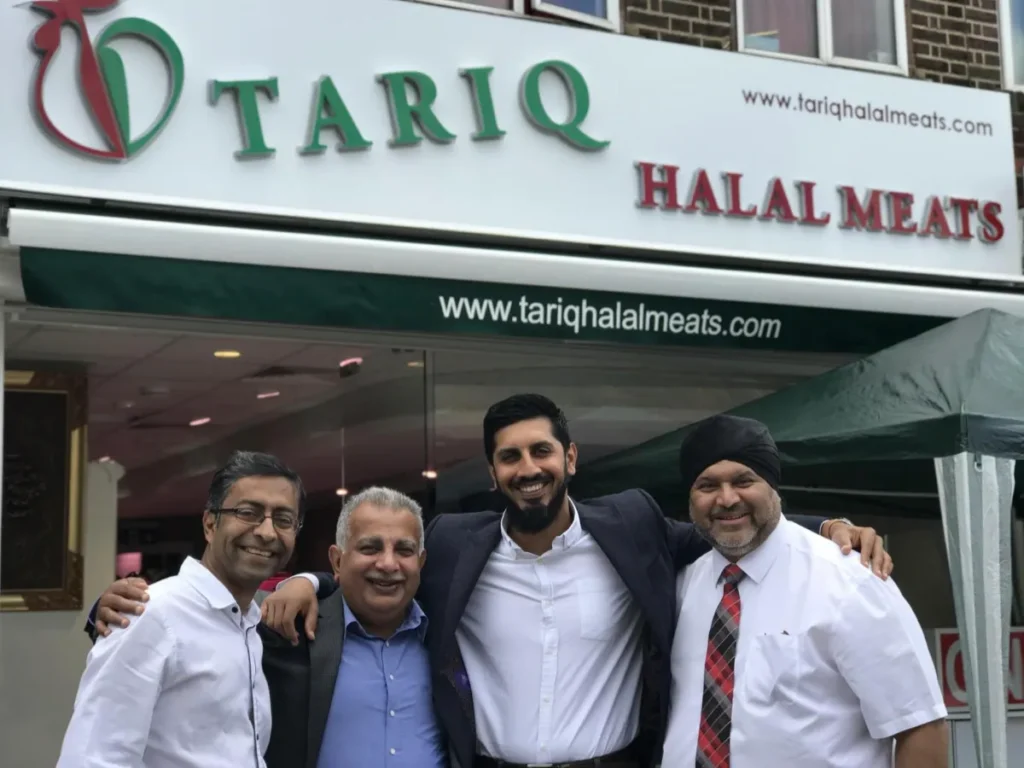
When he opened the first Tariq Halal Meats store on Southall Broadway in 1994, the response to the market problem was deliberate and, within his sector, radical — bright interiors, rigorous hygiene standards, traceable supply chains, and a brand identity designed to travel beyond the communities it had historically served. The ambition, as Sheikh put it at the Stratford Mall launch in 2021, was to become the “Harrods of the meat industry” — a one-stop destination built on premium quality, not corner-shop compromise.
The wholesale pivot that built the foundation
The early years were not straightforward. Like most independent food businesses, Tariq Halal Meats encountered the standard friction of building distribution, trust, and volume simultaneously. The pivot that changed the company’s trajectory was a move into wholesale — supplying independent retailers, restaurants, and cash-and-carry outlets rather than relying solely on direct consumer sales. By 2003, the company’s annual turnover had reached nearly €2.5 million. More importantly, it had built the supply chain credibility and operational infrastructure that would later make a supermarket partnership viable.
The Sainsbury’s listing — placing Tariq Halal Meats products in over 300 stores nationally — was not just a commercial milestone. It was a validation of the thesis Sheikh had been building since 1994: that British-sourced halal meat, presented to the same standard as any premium food product, could compete and win in the mainstream grocery market. Today, Tariq Halal Meats operates across multiple channels simultaneously — own retail stores, wholesale, supermarkets, online delivery, and international exports to Europe and the UAE.
Franchising as the scaling mechanism
With over 30 branded Tariq Halal Meats stores now operating across the UK — in London boroughs including Southall, Ilford, Hounslow, and Green Street, as well as Slough, Cardiff, and beyond — Sheikh has articulated the next phase of growth in explicitly ambitious terms: 100 stores and more than 1,000 new jobs. The vehicle for that expansion is a franchise model that packages the brand’s supply chain, training programme, and operational systems into a replicable format for new entrants. The pace of that rollout is already visible: following successful openings in Manchester and Glasgow, Tariq Halal Meats has just announced Southampton — the brand’s first store in the South of England — opening on 9 April 2026.
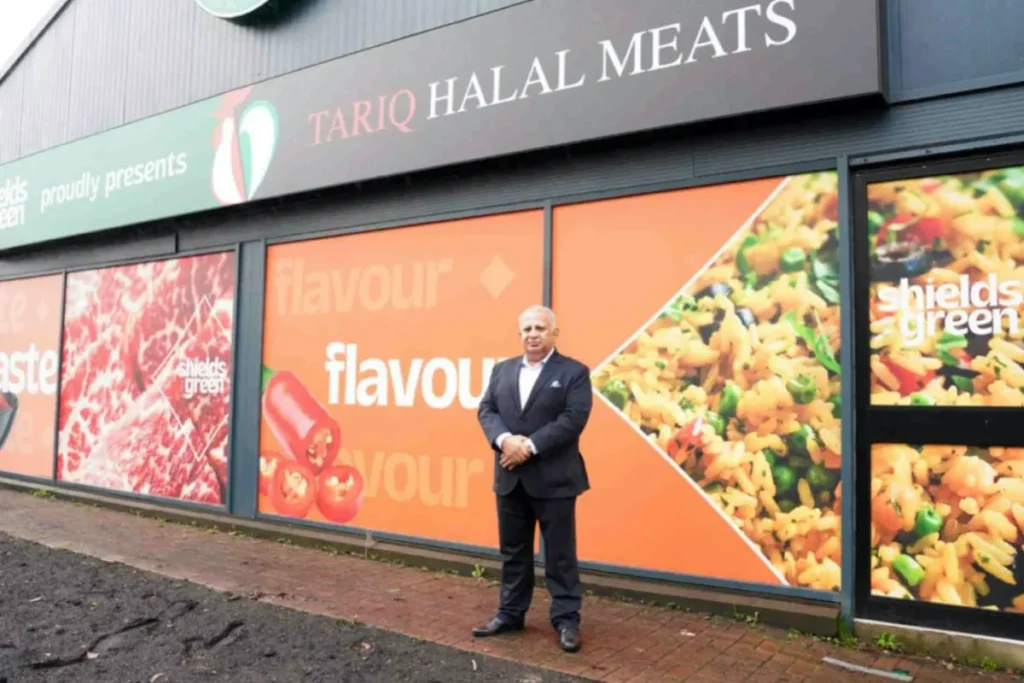
“After the success of Manchester and Glasgow, Southampton represents a key step in our growth across the South of England. We have always believed that access to high-quality halal meat should not be limited by location.” Tariq Sheikh, Chairman, Tariq Halal Meats
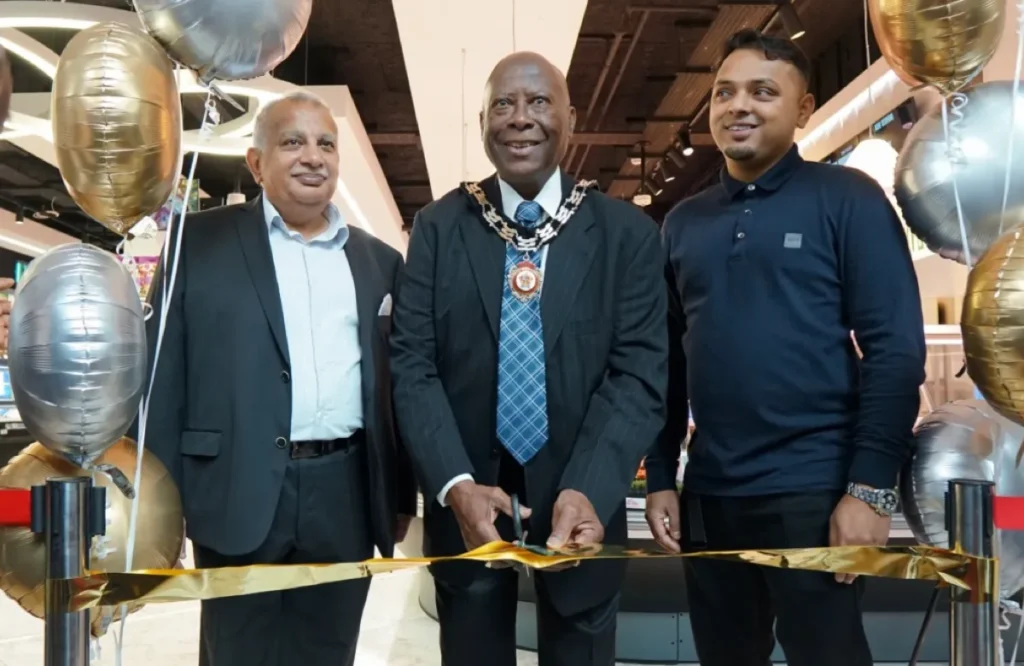
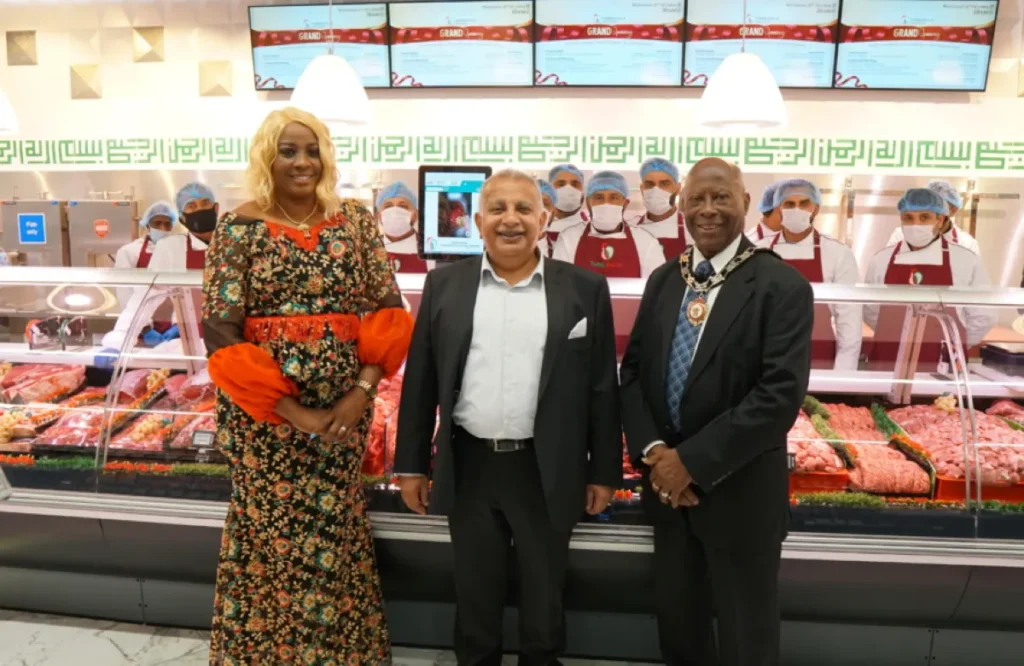
The Stratford Mall store in 2021 offered an early indication of how the brand was positioning itself for a broader audience. Inaugurated by Councillor Winston Vaughan, Chair of the London Borough of Newham, the store was built to serve Asian, African, and Caribbean customers — a deliberate signal that Tariq Halal Meats was building a multicultural food retail destination, not a single-community brand. Vaughan remarked at the opening that Newham and Stratford were precisely the right conditions for the brand: a rapidly developing borough with a growing population hungry for exactly this kind of investment.
The franchise strategy also reflects a broader shift in how the brand presents itself to the market. CEO Kunal Patel has been direct about this evolution: customer expectations across the UK have changed. People are no longer shopping for halal as a category — they are shopping for quality, transparency, and a retail experience they can trust. Southampton, Patel notes, was built to deliver exactly that. The brand’s international ambitions push the logic further still, with drive-thru concepts in both the UK and Dubai already in development — a format that would represent yet another first for the halal food sector.
“We are seeing a clear shift in customer expectations across the UK. People are no longer just looking for halal — they are looking for quality, transparency, and a retail experience they can trust.” Kunal Patel, CEO, Tariq Halal Meats
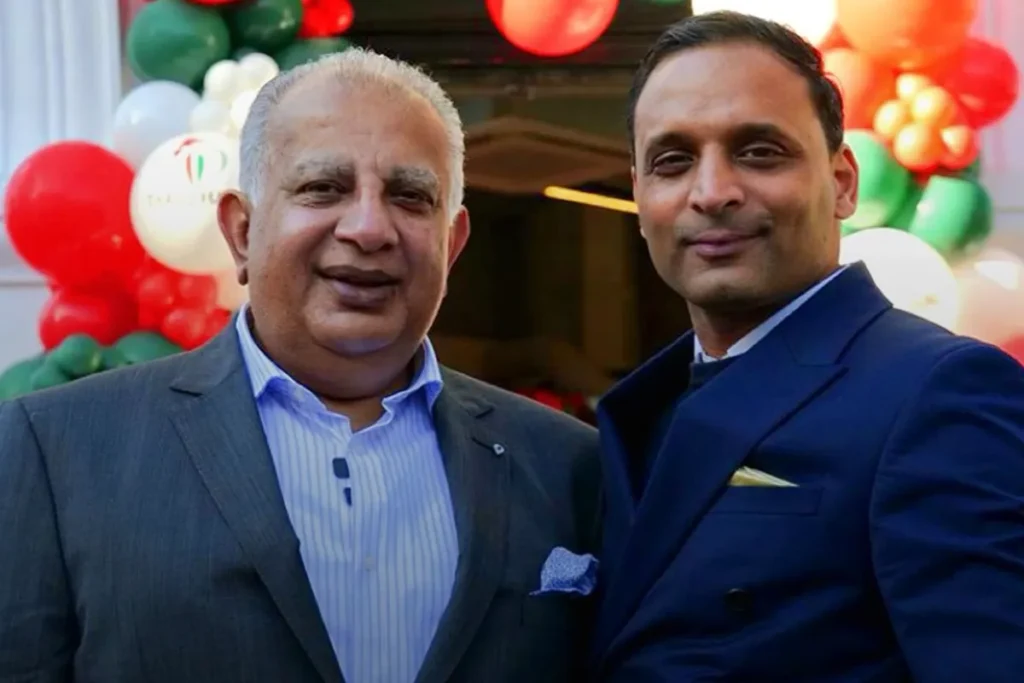
Recognition, philanthropy, and the larger argument
The honours have followed. In 2024, Sheikh received an honorary doctorate at the Leaders in London Summit, recognising his contribution to halal industry innovation and entrepreneurship. He was also awarded the Avicenna Medal at a ceremony in the House of Lords, presented by Prince Philipp of Liechtenstein, for his role in transforming the sector and his charitable work. Most recently, in 2025, the City of London Corporation conferred a civic honour on him — an acknowledgement, from one of the UK’s oldest financial institutions, of a business career built in a sector that institution had never previously needed to notice.
Sheikh has also been an active supporter of the British Asian Trust, the British Heart Foundation, and cancer-related charities, and has been vocal about creating pathways for entrepreneurs from Black, Asian, and Minority Ethnic backgrounds. In his telling, his own journey — working-class immigrant child to nationally recognised business figure — is not a personal story but a structural one, about what becomes possible when ambition meets operational discipline.
Scale, credibility, and the work still ahead
It would be incomplete to treat the Tariq Halal Meats story as a finished arc. Building a national franchise network is operationally demanding, and scaling a food brand at speed introduces the quality-consistency pressures that have derailed larger operations than this one. Some customer feedback online has reflected gaps between the brand’s premium positioning and the experience at individual outlets — a known risk in any multi-site food business, and one that the franchise expansion will need to manage carefully.
But the core achievement is not in doubt. Tariq Halal Meats took a trade defined by its insularity and informality and imposed on it the logic of a modern food brand — traceable sourcing, consistent presentation, supermarket-grade standards, and a replicable retail format. The 100-store target is a business goal. It is also, in the context of where the halal food sector stood when Sheikh opened his first Southall shop in 1994, something closer to a proof of concept for an entire industry.