In April 2017, something unusual happened to an app’s ratings. Snapchat, then riding high as the platform that Instagram had failed to kill, watched its App Store score in India collapse almost overnight — from five stars to one. Millions of Indians coordinated to downvote it. Hashtags like #UninstallSnapchat and #BoycottSnapchat trended nationally. A supermodel’s Instagram account was flooded with abuse. An entirely different company — a homegrown Indian e-commerce firm that shared the first syllable of its name — had its app mass-uninstalled by people who could not tell the two apart.
All of this traced back to a single line. A line that, as it turns out, no one has ever been able to independently verify was actually spoken.
Where the quote actually came from
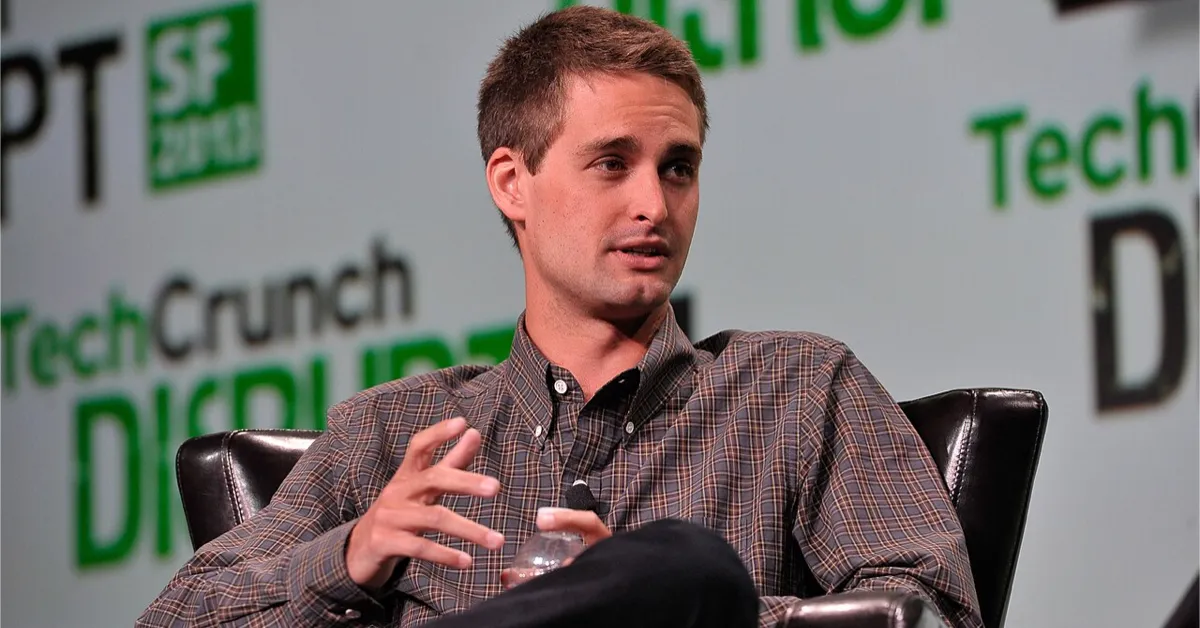
The origin is not a press conference. It is not an interview. It is not a leaked audio file. The quote comes from a lawsuit filed in a California court in January 2017 by Anthony Pompliano, then a former growth lead at Snapchat. In his complaint, Pompliano alleged that during a 2015 internal meeting about international expansion, Spiegel cut him off mid-sentence. The trade magazine Variety reported on the lawsuit in April 2017, and from there the story detonated across Indian media.
The exact text from Pompliano’s court filing, as reported by Variety and confirmed by PolitiFact, read:
“The data showed that Snapchat’s international user metrics were very low, even in countries with high social media engagement, such as Spain and India. When Mr. Pompliano attempted to explain that he could implement strategies to achieve significant growth for Snapchat in these major markets, Mr. Spiegel abruptly cut in and said, ‘This app is only for rich people. I don’t want to expand into poor countries like India or Spain.'”
— Court Filing — Pompliano v. Snap Inc. (2017) via Variety
This is the sole primary source for the “poor countries like India” quote. It originates entirely from one person’s account — recorded in his side of a lawsuit — of a private meeting held nearly two years before the filing. No transcript, no email, no second witness. Just Pompliano’s word, placed before a court.
What Snapchat said
Snap Inc. pushed back immediately and forcefully. Within a day of the story breaking, the company issued a categorical denial carried by multiple Indian and international media outlets.
“Obviously Snapchat is for everyone! It’s available worldwide to download for free. Those words were written by a disgruntled former employee. We are grateful for our Snapchat community in India and around the world.”
— Snap Inc.
In a second statement, the company was even blunter:
“This is ridiculous. Obviously Snapchat is for everyone! It’s available worldwide to download for free.”
Snap’s legal team also attacked Pompliano’s credibility in court filings, describing the overall suit as a “publicity stunt” and calling him “a disgruntled former employee fired for poor performance.” They further alleged he had brought similar accusations against other employers, intended to cast doubt on the pattern of his complaints.
How the media turned “alleges” into “said”
Variety, which broke the story, was careful: its headline explicitly framed the quote as something an ex-employee “alleges.” That qualifier signalled to any careful reader that this was a contested legal claim, not a confirmed statement.
A significant portion of Indian media did not maintain that framing. PolitiFact traced the chain of amplification — from a News18 tweet that attributed the remark directly to Spiegel without mentioning it came from a lawsuit, through the wave of Indian publications that followed suit. Several dropped “allegedly” entirely, presenting the filing’s account of a private meeting as a verified public statement. Some outlets later reinserted the qualifier, but by then the simplified version — “Snapchat CEO called India poor” — had already been packaged into memes and shared across WhatsApp and Twitter at a speed no correction could match.
This was not simply bad journalism. It was a structural problem: outrage spreads faster than nuance. A headline that reads “CEO Says India Is Too Poor for His App” travels infinitely further than one that reads “Ex-Employee Alleges CEO Made Remark in Private Meeting Two Years Ago, Company Denies It.”
The collateral damage
The outrage found targets beyond Evan Spiegel. Two became symbols of how viral anger operates at scale.
First: Snapdeal, the Indian e-commerce company. Its name begins with “Snap.” That was enough. Thousands of Indians uninstalled Snapdeal’s app, left it one-star reviews, and directed abuse at its social media accounts — prompting Snapdeal co-founder Kunal Bahl to tweet that being asked to clarify his company was not Snapchat was “possibly the last thing I thought I would ever need to do.” Snapdeal had no connection whatsoever to Snapchat, Spiegel, or the 2017 lawsuit.
Even people who never read the lawsuit remember that there was a controversy where Snapchat insulted India. That ambient memory is the rumour’s real engine.
Second: Miranda Kerr, the Australian supermodel who was Spiegel’s fiancée at the time. Kerr had said nothing about India. She had no role in any meeting, no line in any lawsuit, no statement of any kind on the subject. That did not stop thousands of users from flooding her Instagram with abuse directed at her because of what her partner had allegedly said in a 2015 internal meeting.
What the fact-checkers concluded
PolitiFact examined the viral claim — that Spiegel had specifically said his app was “for rich people” and that he did not want to expand into “poor countries like India and Spain” — and traced it through the chain: a News18 tweet, the Variety article, and the underlying lawsuit. Its conclusion: the claim is based entirely on a lawsuit’s description of a private meeting, not on any recorded or independently verified statement. Snapchat categorically denies it. The conversation allegedly happened in September 2015, nearly a year and a half before the filing, with no further corroborating testimony. PolitiFact rated the viral claim as mostly false.
Why the controver refuses to die
The alleged quote is perfectly engineered to persist. It is short. It is emotionally charged. It fits a pre-existing anxiety about how Western tech companies view India — as a market to extract from, not a community to invest in. “CEO calls India poor” can be a meme. “Ex-employee alleges CEO made a remark in a private meeting nine years ago, company denies” cannot.
The boycott dynamics that followed are now a familiar template in India’s digital culture: a perceived insult, a hashtag, mass one-star reviews, collateral damage to unrelated brands and individuals. The same pattern has repeated itself — when Fabindia named its 2021 Diwali collection Jashn-e-Riwaaz and faced #BoycottFabindia within hours; when the BBC’s 2023 Modi documentary triggered government blocks, IT raids, and #BoycottBBC across social media. Each time, the mechanics are the same: trigger, hashtag, pile-on, retreat.
So, did he say it?
Based on everything in the public record: Evan Spiegel was accused of saying it. By one former employee, in a lawsuit filed in an adversarial legal context, about a private meeting that took place in 2015. Snap Inc. denies it, categorically and consistently. No recording, no email, no corroborating witness has ever emerged.
The rumour endures not because the evidence is strong, but because the story it tells — of a Silicon Valley billionaire dismissing a billion-plus nation as too poor for his app — is one that people wanted to believe. It arrived in a format perfectly suited for outrage, and the corrections arrived in a format perfectly suited for being ignored.
The most honest thing that can be said about the “poor India” quote is the thing that makes for the worst headline: we do not know.