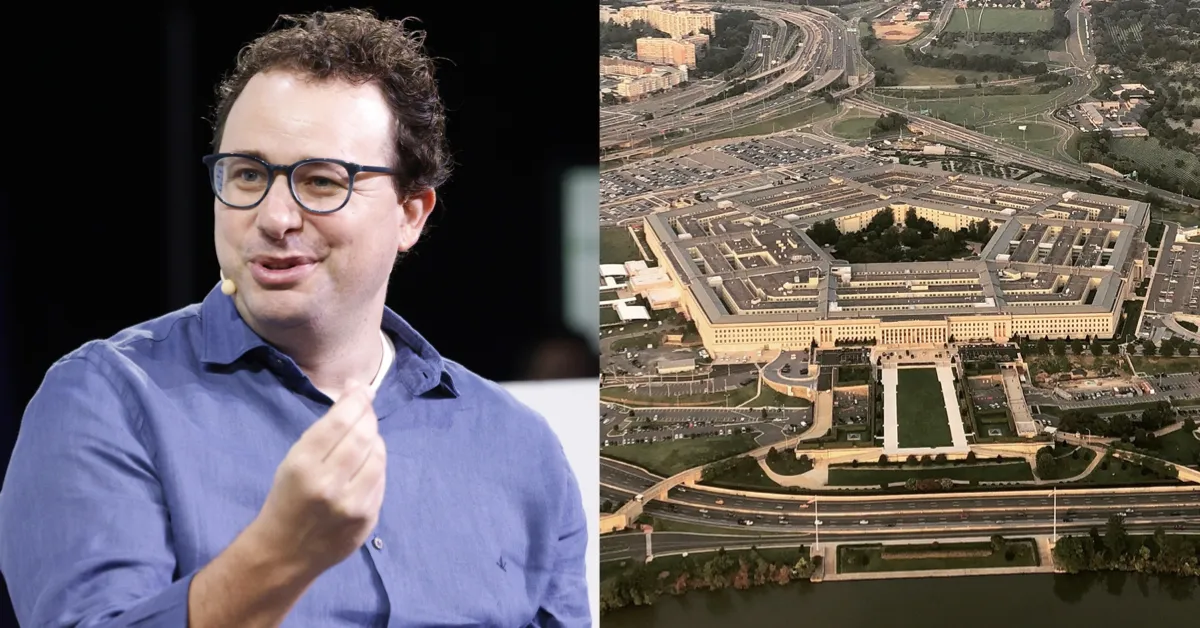
The U.S. Department of Defense has formally designated artificial intelligence company Anthropic a “supply-chain risk,” a rare step that effectively prevents Pentagon contractors from using the company’s AI technology in military projects. NPR reported that the Pentagon informed Anthropic leadership that the company and its products are deemed a supply-chain risk.
The designation takes effect immediately and applies to Anthropic’s AI models, including its widely used Claude chatbot platform.
In a statement confirming the decision, the Pentagon said it had “officially informed Anthropic leadership the company and its products are deemed a supply chain risk, effective immediately.”

The move marks an unusual escalation in the growing tensions between U.S. defense authorities and artificial intelligence developers over how advanced AI systems should be deployed in military operations.
Timeline: How the Pentagon–Anthropic dispute escalated
| Period | Key development |
|---|---|
| 2023–2024 | Anthropic gains rapid adoption with its Claude AI models, positioning itself as a leading “AI safety” company with strict usage policies governing how its systems can be deployed. |
| 2025 | The U.S. Department of Defense begins exploring large language models for intelligence analysis, operational planning, and decision-support systems across defense programs. |
| Early 2026 | Disagreements intensify between Anthropic and defense officials over restrictions on military applications of its AI models, particularly around surveillance and autonomous weapons use. |
| March 2026 | The Pentagon designates Anthropic a “supply-chain risk,” instructing contractors to stop using the company’s technology in defense-related projects. |
Dispute centers on military AI restrictions
The conflict stems largely from Anthropic’s usage policies governing its AI systems.
The company has imposed safeguards that restrict the use of its models in certain areas, including mass surveillance and fully autonomous weapons systems.
Defense officials argued those restrictions could limit the military’s ability to deploy technology for lawful defense purposes.
According to officials familiar with the decision, the Pentagon viewed the limitations as a potential operational risk for national security programs.
Anthropic’s AI tools had previously been integrated into various government workflows, and its Claude models were reportedly used in national security environments for tasks such as data analysis and intelligence support.
Negotiations between the company and the Defense Department reportedly broke down over whether the military could use the technology without those restrictions.
Rare designation for a U.S. technology firm
Supply-chain risk designations are typically applied to foreign vendors viewed as potential threats to national security.
Applying the label to a U.S. artificial intelligence company is highly unusual and could force defense contractors to discontinue the use of Anthropic’s products.
Anthropic has indicated it plans to challenge the decision in court, arguing that the designation is unjustified.
The company maintains that its safeguards are necessary to prevent misuse of advanced AI systems and to avoid applications that could threaten civil liberties or enable autonomous lethal weapons.
A widening battle over AI and national security
The Pentagon’s decision highlights the increasingly complex relationship between AI startups and national defense institutions.
Anthropic has positioned itself as one of the industry’s strongest advocates of “AI safety,” emphasizing safeguards designed to prevent harmful applications of advanced models.
At the same time, defense agencies have been accelerating efforts to integrate artificial intelligence into intelligence analysis, battlefield decision-making, and military logistics.
That tension has turned the Anthropic dispute into a broader test case for how much control private AI companies should retain over the downstream use of their technologies — a shift previously explored in LAFFAZ’s analysis of the Anthropic–OpenAI Pentagon AI showdown: A power shift in military AI.
Growing industry backlash
The Pentagon’s decision has also triggered criticism from parts of the technology community.
Several AI researchers and technology workers have warned that the designation could discourage companies from maintaining strong safety guardrails for advanced AI systems.
As LAFFAZ previously reported in Tech workers urge Pentagon to withdraw Anthropic ‘supply-chain risk’ label, a coalition of tech employees and AI researchers has called on defense authorities to reconsider the decision, arguing that punitive action against safety-focused companies could undermine responsible AI development.
What happens next
Despite the designation, the immediate commercial impact on Anthropic may be limited because the restriction primarily affects Department of Defense projects rather than private-sector deployments.
However, the case could have long-term consequences for the AI industry, potentially shaping how governments negotiate with technology companies over military access to advanced AI systems.
As defense agencies around the world move to integrate artificial intelligence into national security infrastructure, the dispute underscores a central question facing the industry: whether AI developers can maintain strict ethical guardrails while operating within military ecosystems.