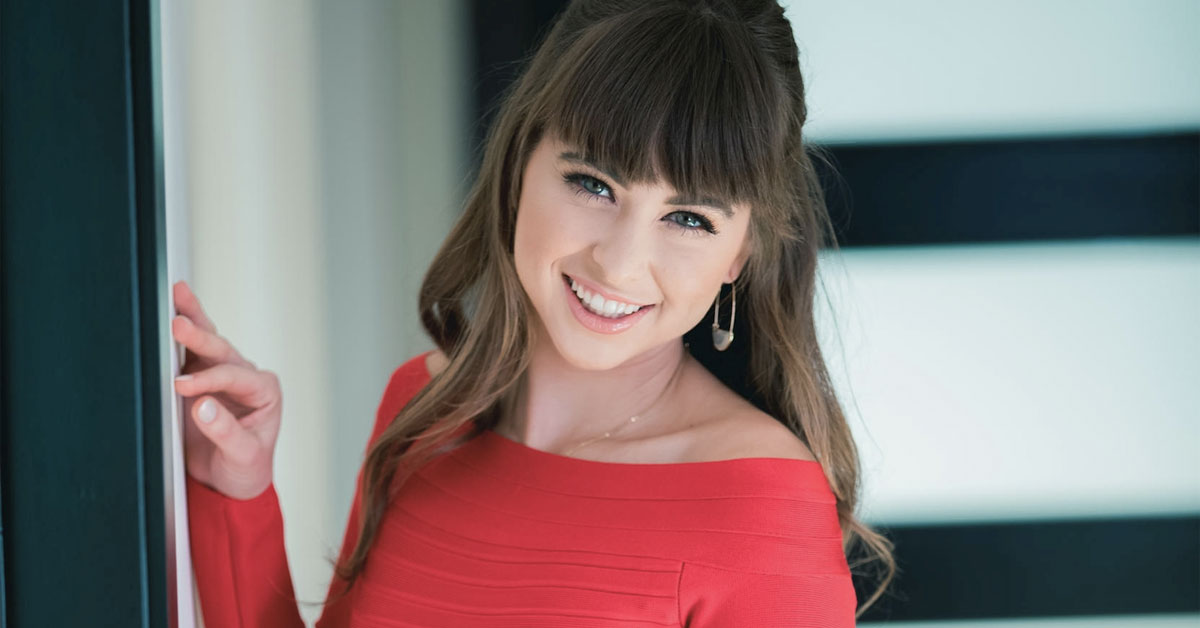
Model and creator Riley Reid is exploring how artificial intelligence can extend a personal brand beyond traditional content creation, using AI to build interactive digital personas that engage with fans at scale.
As reported by Business Insider, Reid has launched an AI chatbot platform called Clona, currently in beta, designed to let creators build digital versions of themselves that can interact with audiences even when they are offline or step back from active content production. The platform represents a growing intersection of AI technology and the creator economy, where digital identity itself becomes a scalable product.
Using AI to scale fan interaction
In her interview with Business Insider, Reid explained that AI offered a way to maintain fan relationships without demanding constant personal availability.
“I’m married. I’m a mother. I’m trying to do multiple businesses,” Reid told Business Insider. “This gives me an opportunity to immortalize myself and still be in that field without investing my full self. I feel so lucky I’ve had the opportunity to create Riley Reid as a mainstream name. I really want to utilize that.”
Reid noted that direct interaction with fans was limited during her earlier mainstream career, and even on platforms like OnlyFans, responding to individual messages at scale became increasingly difficult. Clona is intended to bridge that gap by automating interaction while preserving a sense of personality and authenticity.
How Clona works
Clona allows users to exchange up to five messages for free. Unlimited chats and voice messages are offered through a subscription priced at $30 per month, according to Business Insider.
A spokesperson told the publication that Clona is powered by a proprietary large-language model based on Meta’s Llama, which has been “heavily modified and fine-tuned” to support creator-specific personas. To build Reid’s chatbot, the system was trained on hundreds of hours of her audio and video content, along with her full social media history.
Reid also personally reviewed and corrected AI outputs to ensure the digital persona reflected her views accurately, particularly on social and political topics.
“One of my biggest things is, I believe that trans people should have rights,” Reid said.
She added that it was important for the AI to respond thoughtfully rather than avoid sensitive subjects altogether.
“If someone says something that is anti trans, or transphobic, how does my AI respond in a politically correct way that says like, ‘Hey, I don’t agree, I love the trans community’? I don’t want my AI to just skip over trans rights, I want her to have my actual opinion.”
Customizable digital personas
Beyond replicating a single version of herself, Reid said Clona allows users to request customized variations of her digital persona.
“Riley is a persona, and from this persona that you fantasize about you’re able to create a version that is more suitable to your specific needs,” she said. “You can request your AI Riley to give herself a purple mohawk if that’s what you’re into, because real-life Riley would never do that.”
The company plans to eventually open Clona to other creators and public figures interested in building AI-driven digital copies of themselves. However, Reid acknowledged that training AI to closely resemble a real person is time-intensive and requires ongoing refinement.
Running a proprietary AI model also comes with high operational costs. According to Business Insider, cloud infrastructure alone currently costs the company around $30,000 per month, pushing the team to explore ways to optimize expenses.
Human connection in an AI-driven future
Despite the heavy use of automation, Reid believes the platform’s appeal lies in its grounding in real human experience.
“I like that my AI has a form of human connection because she’s based off of a real person,” Reid said. “She has my life and everything. People always care for human connection, and that’s always going to exist.”
Staff note: AI personas and the creator economy
Digital personas are not entirely new. AI influencers like Lil Miquela and virtual characters inspired by public figures have already gained traction across social media. What sets Clona apart is its emphasis on creator-authored identity, where the individual actively shapes how their AI counterpart thinks, responds, and represents personal values.
Beyond entertainment, platforms like Clona highlight how AI is increasingly used across industries to augment human capability rather than replace it. From healthcare diagnostics and drug discovery to financial risk management, education, retail, and precision agriculture, AI continues to redefine how work, creativity, and interaction are scaled.
In the creator economy, Clona offers a glimpse into a future where digital identity itself becomes a long-term asset, enabling creators to engage audiences, monetize presence, and retain control over their personal brand, even as technology reshapes how that connection is delivered.