It took less than 48 hours for the mood around consumer AI to shift.
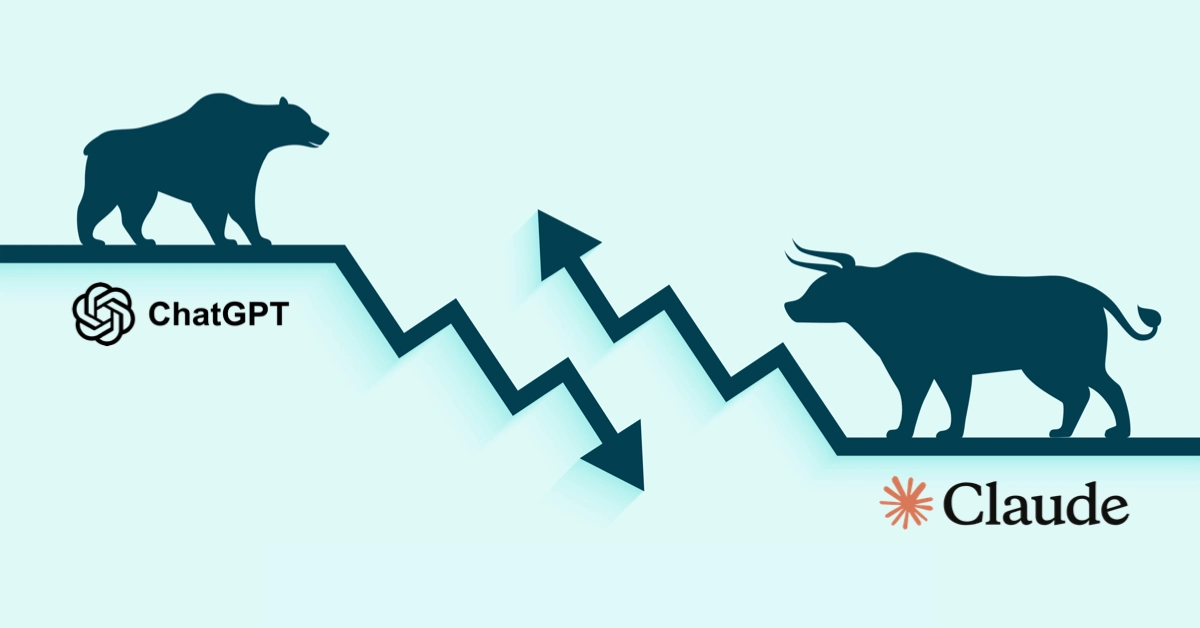
A partnership announcement triggered outrage. Users began deleting apps. Ratings collapsed. A rival climbed to No. 1.
What looked like a political controversy quickly turned into a competitive opening.

And one AI company moved fast enough to capitalize on it.
The Numbers That Shook the AI App Market
- 295% surge in US ChatGPT uninstalls at peak backlash
- 775% spike in one-star reviews in a single day
- 13% drop in US downloads immediately after the news
- 37% jump in Claude downloads (Day 1 of surge)
- 51% additional jump the following day
- 88% increase in Claude daily installs, overtaking ChatGPT
- 20× growth in Claude’s weekly US downloads compared with January
These are not normal fluctuations. They represent one of the sharpest short-term sentiment reversals the consumer AI market has seen.
A Defense Deal Sparks a Consumer Reaction
The trigger was straightforward: OpenAI confirmed a partnership with the US defense establishment. While the company framed the collaboration as compliant with legal and regulatory frameworks, online discourse intensified quickly.
App intelligence data showed uninstall activity spiking nearly fourfold compared with normal daily patterns. One-star reviews surged dramatically during the same period. Downloads, which had been rising before the news, reversed course.
Meanwhile, Claude recorded back-to-back daily download jumps of 37% and 51%. Separate analytics indicated that Claude’s installs overtook ChatGPT’s daily downloads for the first time during the surge.
The numbers tell a clear story: a segment of users was willing to switch.
That alone is significant.
Consumer AI has long been characterized by inertia. Users build workflows, prompts, and habits. Switching costs — even small ones — often prevent migration.
Last week, that inertia cracked.
Ethics Is Becoming a Competitive Differentiator
The more consequential development may be narrative positioning.
While OpenAI defended its partnership, Anthropic’s leadership publicly reiterated concerns about deploying AI systems in military and surveillance contexts, arguing that current models are not yet safe enough for such applications.
Whether one agrees or disagrees with that stance is secondary.
What matters strategically is this: AI ethics moved from whitepaper language into consumer decision-making.
For the first time at scale, app store behavior appeared linked to perceived values alignment.
This suggests a new variable in the AI market equation:
Trust capital.
Historically, AI competition centered on:
- Model performance
- Speed
- Pricing
- Ecosystem integration
Now, brand alignment and perceived moral positioning may enter the mix.
That changes the calculus for every major AI lab.
The Strategic Timing of Claude’s Memory Expansion
Here is where the story deepens.
Amid the download surge, Anthropic expanded Claude’s conversational memory to free-tier users. Previously limited to paid subscribers, the feature allows Claude to retain context across sessions — increasing personalization and stickiness.
At the same time, the company introduced easier workflows for importing prior chat histories from other AI services.
This is not a trivial product tweak.
Memory features reduce one of the biggest friction points in AI switching: starting over.
When users migrate, they don’t just change apps — they lose saved prompts, accumulated context, and workflow continuity. By making memory broadly accessible and easing chat transfer, Anthropic effectively lowered migration costs at the peak of competitor vulnerability.
Even if the rollout timeline was planned earlier, the alignment with the uninstall surge amplified its strategic impact.
It transformed a protest moment into a retention opportunity.
The AI Market Enters Its Trust Economy Phase
Three structural shifts are emerging from this episode.
1. AI Loyalty Is Fragile
For months, ChatGPT appeared untouchable in consumer mindshare. The uninstall surge demonstrates that sentiment can shift rapidly when broader societal issues enter the equation.
Even if many users reinstall later, the psychological barrier has been crossed: switching is possible.
2. Feature Parity Wars Will Accelerate
Memory, personalization, and cross-session recall are becoming baseline expectations. As AI assistants converge in model capability, differentiation will increasingly hinge on experience design and ecosystem depth.
Anthropic’s free-tier expansion signals a willingness to compete aggressively on user stickiness, not just model benchmarks.
3. Government Alignment Is No Longer Neutral
Partnerships with defense agencies may carry reputational trade-offs in consumer-facing markets. That does not mean such partnerships will disappear — enterprise and government contracts remain financially significant.
But companies may now weigh consumer optics more carefully.
The tension between institutional revenue and retail trust could define the next phase of AI commercialization.
The Broader Industry Question
This moment raises a deeper question: Can AI companies remain politically neutral as their technology becomes infrastructural?
Artificial intelligence now intersects with national security, economic policy, education, healthcare, and public discourse. As integration deepens, strategic alliances will inevitably surface.
The market reaction suggests that at least some users expect transparency and boundaries around those alliances.
For founders building AI-native startups, the lesson is subtle but powerful:
Brand positioning in frontier tech is no longer just about performance claims. It is about value signaling.
Is This a Temporary Spike — or a Structural Shift?
Weekly download data shows Claude’s US installs now roughly 20 times higher than in January, though broader AI demand may also be contributing.
The key unknown is durability.
App store surges often cool as news cycles move on. Some users may reinstall. Others may multi-home — using both assistants depending on task.
Yet even if download momentum stabilizes, the competitive dynamic has changed.
Anthropic demonstrated that:
- Ethical positioning can influence consumer behavior.
- Product timing can convert narrative advantage into tangible growth.
- Switching barriers in AI are lower than previously assumed.
And OpenAI’s experience illustrates how quickly trust narratives can escalate when technology intersects with geopolitics.
The Bottom Line
This was not just a defense contract story.
It was a market reaction story.
It was a product strategy story.
And it may become a case study in how quickly trust can move users in the AI era.
Performance still matters. Price still matters.
But trust, alignment, and perceived intent are emerging as measurable competitive forces.
In the battle for AI dominance, code is no longer the only differentiator.
Values are becoming product features.