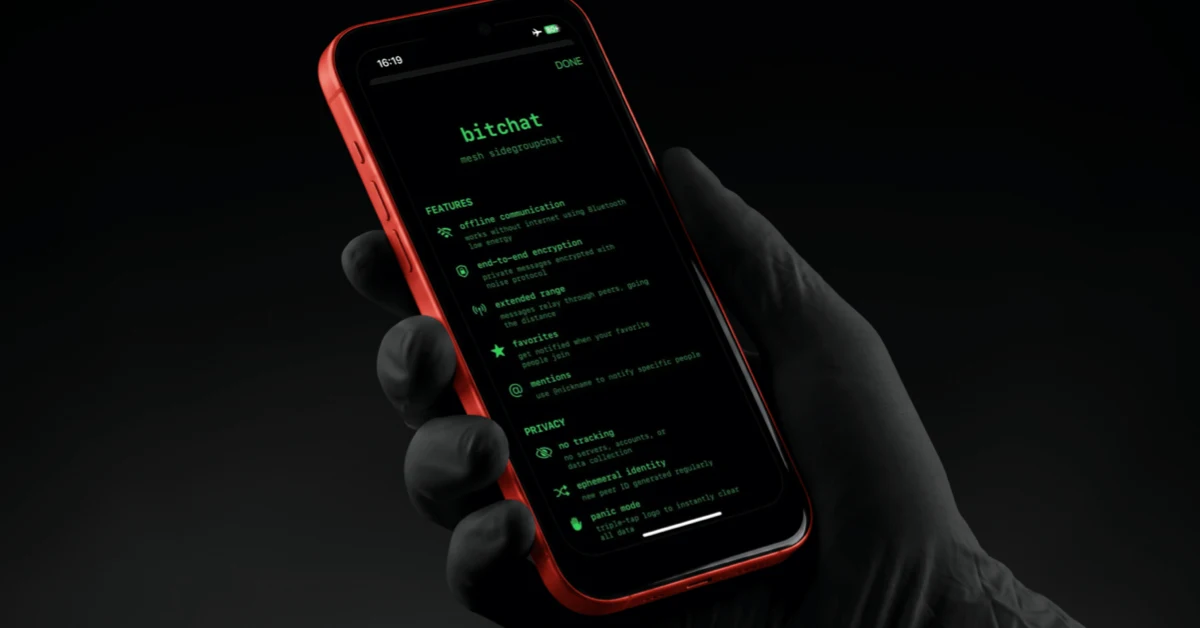
Apple has removed Bitchat, the offline messaging app built by Jack Dorsey, from its India App Store after the Ministry of Electronics and Information Technology (MeitY) demanded it under Section 69A of the Information Technology Act.
Dorsey, the Twitter co-founder who also runs Block, posted Apple’s notice on X himself. The notice cited “content that is illegal in India” as the reason and did not say what that content was.
“Government of India officially removes bitchat from the App Store.” said Dorsey in his post on social media platform X
Apple’s notice says the app stays available outside India. Inside the country, access through TestFlight, Apple’s beta-testing service, is blocked too. The app was also missing from Google Play when TechCrunch checked on Saturday, and the Bitchat website could not be reached on various internet service providers. It is not clear whether Google or the providers received formal directions. Apple, Google, and MeitY did not respond to TechCrunch’s requests for comment.
This is the second move against the project. In July, India’s cybercrime agency ordered GitHub to take down the Bitchat repositories, with a three-hour deadline. Whether GitHub complied within that window was unclear then, and experts noted that open-source code is routinely mirrored beyond a single platform. The government’s order said Bitchat’s design made it hard for law enforcement to intercept messages or trace users, and it pointed to the app’s ability to keep working during internet shutdowns. That order relied on the IT Act’s provision on intermediary liability, which differs from Section 69A, the blocking power now invoked.
Bitchat launched in July 2025. It passes encrypted messages from phone to phone over a Bluetooth mesh, with no internet connection, central server, or account required. CoinDesk also describes it as built to relay Bitcoin transactions the same way, hopping between devices until one with connectivity broadcasts them to the network.
Demand in India spiked when the protests began. Sensor Tower data cited by TechCrunch shows the country made up about 85% of Bitchat’s global downloads between July 17 and July 23, against roughly 1% in the previous 30 days. Demonstrators reportedly turned to Bitchat and Briar, a rival offline app, after authorities suspended internet services.
The latest order lands during a fresh round of youth-led protests over changes to India’s voter rolls. Police detained several people in New Delhi on Saturday, and authorities suspended internet services around Jantar Mantar for 12 hours on Friday.
The Internet Freedom Foundation, a Delhi-based digital rights group, called the order unconstitutional. Its argument: Section 69A lets the government block unlawful information, not a messaging app, because it can function during shutdowns. The group also noted that neither the blocking order nor the allegedly illegal content behind it has been made public.
For software teams shipping in India, the sequence is the part to watch. The code host was targeted in July, and the app stores followed in October, while the project’s own website is reported unreachable on several networks. MeitY has yet to publish the blocking order or identify the content Apple referred to.