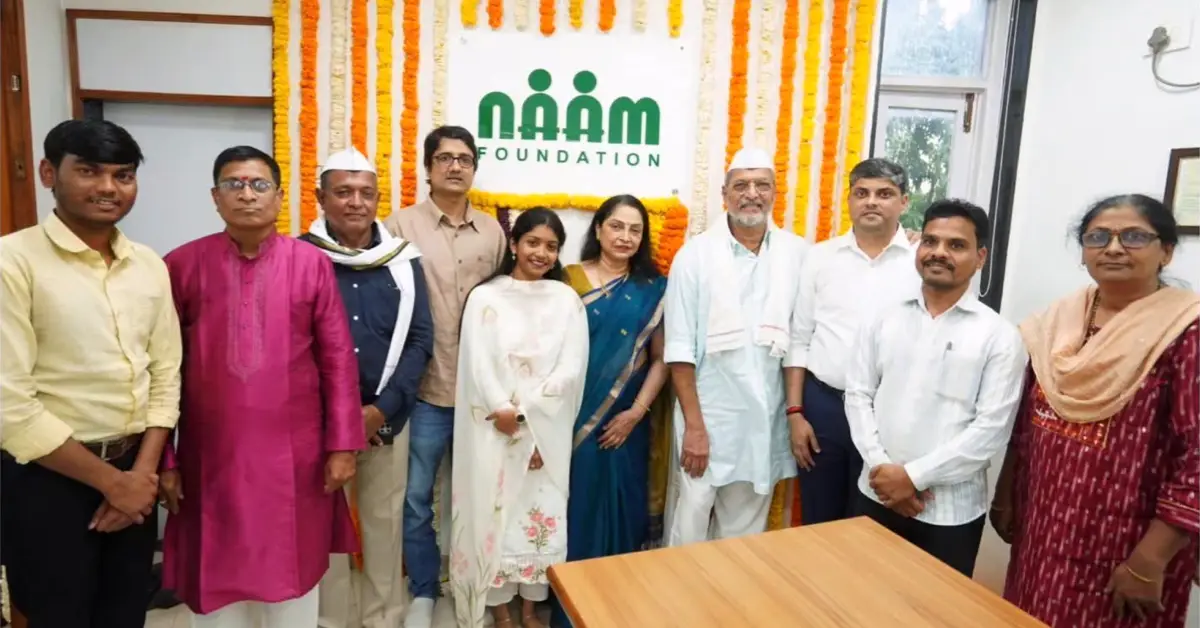
The Naam Foundation, the farmer-relief organisation that Nana Patekar built with Makarand Anaspure in 2015, says it will carry on without its most recognisable face. Anand Asolkar, a coordinator at the foundation, told ETV Bharat that the team would keep working to fulfil Patekar’s dream. What the foundation has not yet said, at least in coverage LAFFAZ could find, is who will lead it.
Patekar died of a cardiac arrest at his home in Goa on October 8. He was 75. According to ANI, as published by Khaleej Times, Dr Salkar said the actor had messaged a friend around 2:30 am to say he was unwell, and that doctors worked to revive him for roughly 45 minutes at the hospital.
The funeral, briefly
His body was flown to Pune, and he was cremated with full state honours at his farmhouse in Donje village, near Khadakwasla, late that night, with a three-gun salute. His son Malhar performed the rites at around 11:30 pm. Asked why the family did not wait until Friday, Malhar said that “a significant amount of time had already passed,” according to Khaleej Times. Chief Minister Devendra Fadnavis and Deputy Chief Minister Eknath Shinde paid their respects, as did actor Jackie Shroff and directors Anil Sharma and Aneez Bazmee; Outlook also carried the day’s coverage.
One detail from that day says something about how the foundation is run. It was Ganesh Thorat, identified by PTI as CEO of the Naam Foundation, who briefed reporters on how Patekar’s remains would travel from Goa to Pune. A salaried executive handling that, rather than a family member or a fellow actor, points to an organisation with its own management layer.
What the foundation has to show
BusinessToday puts the foundation’s cumulative reach at 77.17 lakh farmers supported, disaster relief to 50,908 families, financial aid to the families of 102 Army martyrs, and support to 4,957 widows. LAFFAZ has not independently verified those figures, and they come from a single outlet.
The origin story is better documented. Patekar reportedly dropped plans to buy a car worth about ₹1.5 crore and put the money toward families of farmers who had died by suicide in Vidarbha and Marathwada, per the same BusinessToday report. The foundation was registered in Pune that September. Early help was cheques of ₹15,000 to ₹25,000 for widows and bereaved relatives; the model later widened to village adoption, with Dhondalgaon and Aamala as the best-known examples, where the focus moved to schooling for farmers’ children, skills training and local livelihoods.
The key-person problem
Patekar was more than a name on the letterhead. BusinessToday reports that he put in award money and film fees, often without publicity. He also used his own television appearances to raise money for the foundation, as Free Press Journal noted, and the annual Vasantotsav music festival in Pune routed audience donations to it.
That is the exposure. A foundation that depends on public donations is exposed when the person who drew them is gone, and the first few months after a founder’s death are when donor behaviour tends to show. Fadnavis put the foundation’s origin on record at the time of the death, saying that when the state launched its Jalyukt Shivar water-conservation campaign, “Nana himself stepped forward to support it,” as reported by The Week. The state has been a friendly audience; whether that translates into continued public giving is not something any figure published so far can answer.
What remains unanswered
LAFFAZ did not find a public statement from Anaspure on future leadership, or a trustee announcement on governance. One low-traffic website reported that trustees were expected to issue one; we could not confirm it, and it did not surface in mainstream coverage. Readers and donors looking for clarity will find the foundation’s own channels the first place to check.
For the villages that depend on its check dams and desilting work, the practical test arrives with the next monsoon season, not with the tributes.