For most of the last decade, a D2C founder’s growth story followed a predictable arc: launch in Bengaluru or Mumbai, chase Instagram-led discovery among a young, high-income metro audience, then “expand” into smaller cities once the brand had proven itself. That sequence is starting to invert. According to Unicommerce’s FY26 analysis of over 400 million order items across more than 6,000 digitally native brands, Tier-2 and Tier-3 cities accounted for nearly two-thirds of new D2C orders in the financial year, and around 60 percent of incremental gross merchandise value over the previous year. India’s overall D2C order volumes grew 33 percent year-on-year, with GMV up 32 percent, in a market currently sized between $10 billion and $12 billion and projected to reach roughly $60 billion by 2030.
The data behind the shift
The Unicommerce numbers aren’t an isolated data point. A separate industry study, SGA PR’s “Pulse 2026” report, unveiled at the Bharat Startup Summit, found that categories once considered strictly metro business — protein nutrition, premium skincare, wellness supplements — are now seeing strong adoption in smaller cities including Indore, Ahmedabad, Coimbatore and Udaipur. The report pegs India’s broader retail market at a path to $1.5 trillion by 2030, growing at a 9–10 percent CAGR through FY30, with digital-first brands still capturing only a modest share of that pie — meaning the runway for non-metro D2C growth is, on paper, still early.
Some of this is simple infrastructure catching up. Return-to-origin rates on D2C orders — long a tax on smaller-city expansion because of cash-on-delivery risk and address-verification issues — fell from nearly 39 percent in the November 2025 festive season to about 21 percent by February 2026, per logistics platform Shipway’s data. Smartphone penetration in Tier-2 cities has crossed 70 percent, and household incomes in these markets have grown by close to 40 percent since 2018 — the kind of purchasing-power shift that turns “aspirational” categories into everyday ones.
What it looks like on the ground
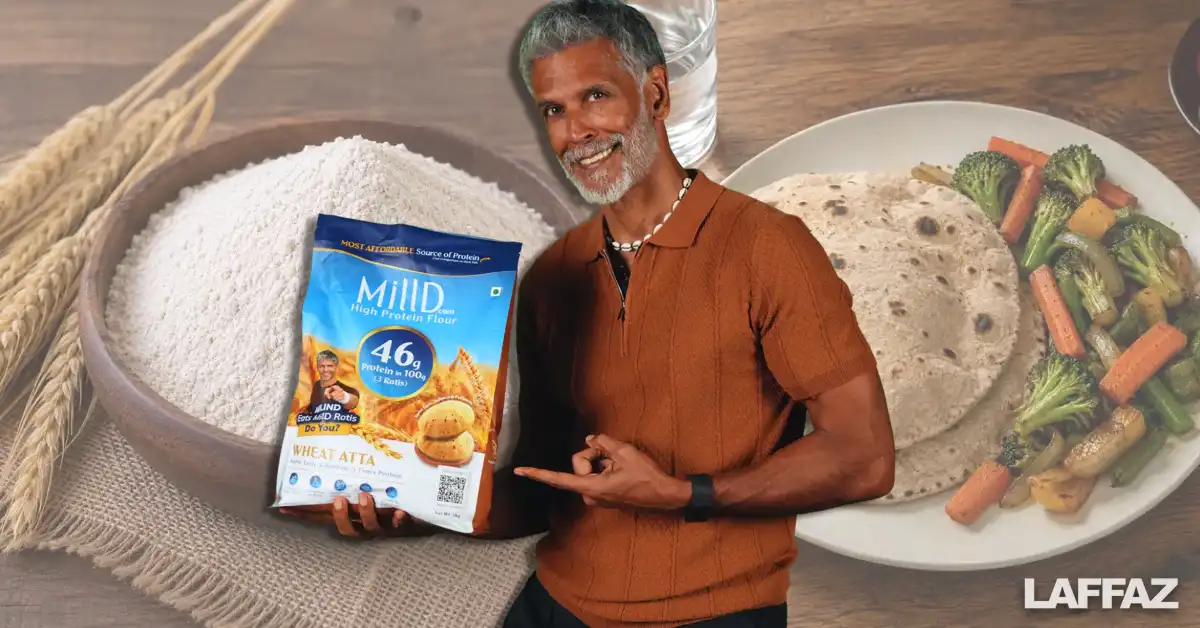
Data on MILLD, the high-protein atta brand founded by Sivaram Briyas and EaseMyTrip co-founder Prashant Pitti, tracks closely with the macro numbers. Nine months after its November 2025 launch, MILLD’s five largest metro markets contribute just 38 percent of total orders — the rest comes from cities such as Mohali, Nagpur, Dehradun, Bhopal, Raipur and Vadodara, several of which saw order volumes rise six to nine times between December 2025 and June 2026. Nearly half of MILLD’s transactions now come from repeat customers, suggesting the smaller-city demand isn’t a one-time discovery spike but a sustained buying pattern.
That kind of trajectory complicates an old assumption in Indian D2C: that a functional nutrition brand needs a metro, gym-going audience before it can scale. MILLD’s growth suggests the opposite — that protein-forward, health-positioned products can find their fastest adopters in cities with no legacy “fitness culture” marketing to compete against.
Founders are already rewriting the playbook
The shift is starting to reshape how brands plan distribution and marketing from day one, rather than treating non-metro markets as a later-stage expansion. Regional-language content, local logistics partnerships and community-first trust-building — as opposed to paid performance marketing calibrated for metro CACs — are increasingly built into launch plans rather than bolted on afterward. Over 70 percent of India’s internet users consume content in regional languages, a data point that’s pushing D2C marketing teams to treat English-first Instagram campaigns as a metro-only tool rather than a default.
There’s a second, quieter shift buried in the SGA PR findings: consumers in these markets are described as moving beyond celebrity-led branding toward ingredient-conscious, outcome-driven purchase decisions. That sits in some tension with brands like MILLD leaning on a celebrity ambassador (Milind Soman) to drive awareness — a reminder that a well-matched ambassador can still open a market, but retention in Tier-2/3 India increasingly depends on product substance holding up once the initial curiosity wears off.
The road ahead
None of this means metro markets are becoming irrelevant — they remain the highest-value customers by average order size for most categories. But the growth curve has clearly shifted. For founders raising their next round, or currently deciding where to spend their first performance-marketing rupee, the numbers point to a straightforward conclusion: the brand that wins Bhopal in 2026 may be building something just as durable as the one that once won Bandra.
FAQs
What share of India’s D2C growth now comes from Tier-2 and Tier-3 cities?
Tier-2 and Tier-3 markets accounted for roughly 66 percent of new D2C orders and about 60 percent of incremental GMV in FY26, according to Unicommerce’s analysis of over 400 million order items.
How big is India’s D2C market expected to become?
Industry estimates put the current market at $10–12 billion, with projections of roughly $60 billion by 2030 as digital adoption and non-metro demand continue to widen.
Which categories are seeing the strongest Tier-2/3 adoption?
Protein nutrition, premium skincare and wellness supplements — categories once considered metro-only — are showing strong uptake in cities like Indore, Ahmedabad, Coimbatore and Udaipur.
Is celebrity endorsement still effective in these markets?
It still drives initial awareness, but industry data suggests Tier-2/3 consumers are increasingly ingredient-conscious and outcome-driven, meaning product substance matters more for retention than star power alone.