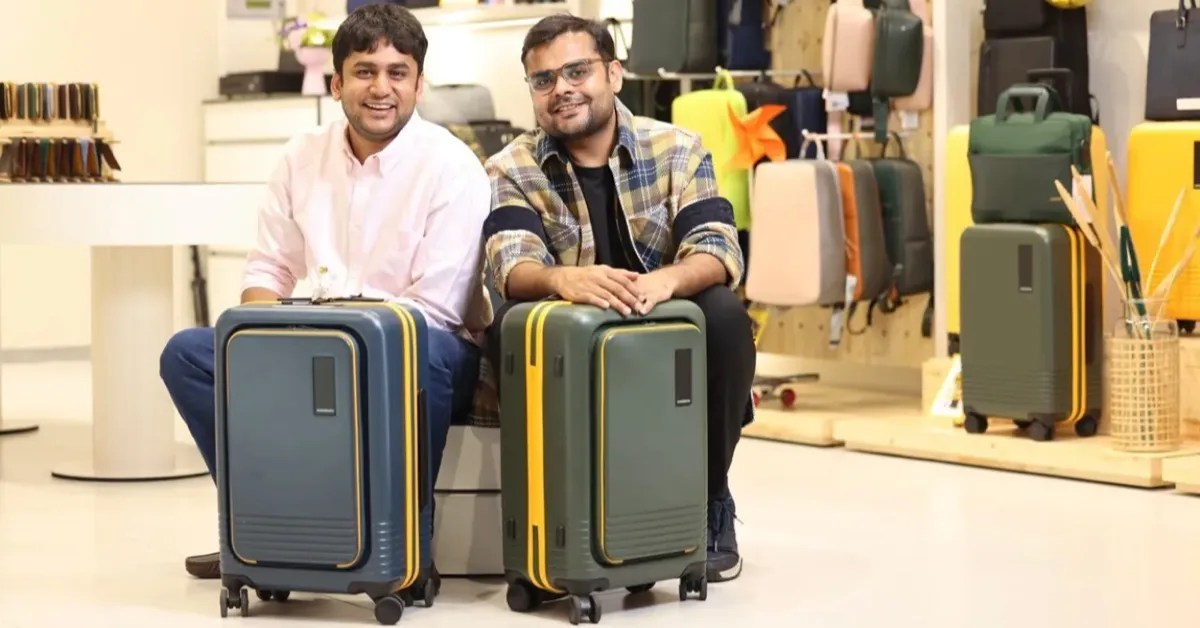
Bengaluru-based Mokobara has raised ₹170 crore, about $18 million, in a Series C round led by Sauce.vc, with Peak XV Partners, AYRA Ventures, Niveshaay Investment, and existing backers taking part. The company has issued no formal statement, and the regulatory paper trail tells a smaller story than the headline number.
The board has approved 1,300 Series C compulsorily convertible preference shares at ₹6.2 lakh apiece — ₹80 crore — plus a further 199 shares at ₹5.4 lakh each, adding ₹10.7 crore. That totals ₹90.66 crore of new issuance against a ₹170 crore round. Sauce.vc vice president Karan Kathpalia has separately said the firm alone put in ₹109 crore, a figure that on its own exceeds the entire approved allotment. The gap points to secondary activity: existing shareholders selling stock to Sauce.vc and other investors rather than the company issuing new shares against all of the headline sum. If that reading holds, Mokobara receives roughly ₹91 crore in the business, and early backers cash out close to ₹79 crore at a valuation nearly three times higher than their entry price — a good outcome for everyone involved, just a different transaction than the one being announced.
Reported figures put the post-money valuation at around ₹1,930 crore, roughly $203 million, up from ₹700 crore at the Series B in February 2024. After allotment, Sauce.vc holds 20.48 percent, Peak XV 16.76 percent, and Saama Capital 13.65 percent. Co-founders Sangeet Agrawal and Navin Parwal hold 21.46 percent and 11.25 percent, respectively, together retaining close to a third of the company at Series C — a healthy position at this stage, though the gap between the two founders’ stakes is unusual and remains unexplained.
Agrawal and Parwal met while working at the furniture brand Urban Ladder, where they watched design turn a commodity category into one buyers would pay a premium for. They spent eighteen months building a first product and were turned down by 33 investors before Sauce.vc’s Manu Chandra wrote the opening cheque. Mokobara now sells luggage, backpacks, totes, slings, wallets and travel accessories online and through roughly 50 stores across Bengaluru, Delhi, Mumbai and Pune, plus one in Dubai opened in February 2025.
The underlying business has grown fast enough to justify scrutiny rather than dismiss it. Operating revenue nearly doubled to ₹230.15 crore in FY25 from ₹117.44 crore, itself more than double the ₹53 crore booked the year before. Net loss widened to ₹10.18 crore from ₹4.24 crore — about 4.4 percent of revenue, a lean ratio for a D2C brand mid-expansion. Against FY25 revenue, the reported ₹1,930 crore valuation works out to roughly eight times sales, defensible for a company that has doubled revenue twice, though it also assumes FY26 continues the pattern, and FY26 numbers are not yet out.
Luggage carries structural advantages few Indian D2C categories share: high average order value, a limited SKU count, no expiry, and a considered purchase customers want to physically handle before buying — the wheels, the handle, the weight. A store selling ₹10,000 suitcases can cover its lease on modest footfall, unlike categories with thin tickets and shelf-space fees. The 50-store network is the part of Mokobara’s story still untested: fifty locations is the point at which a brand stops being capital-light, and store-level unit economics have not been disclosed.