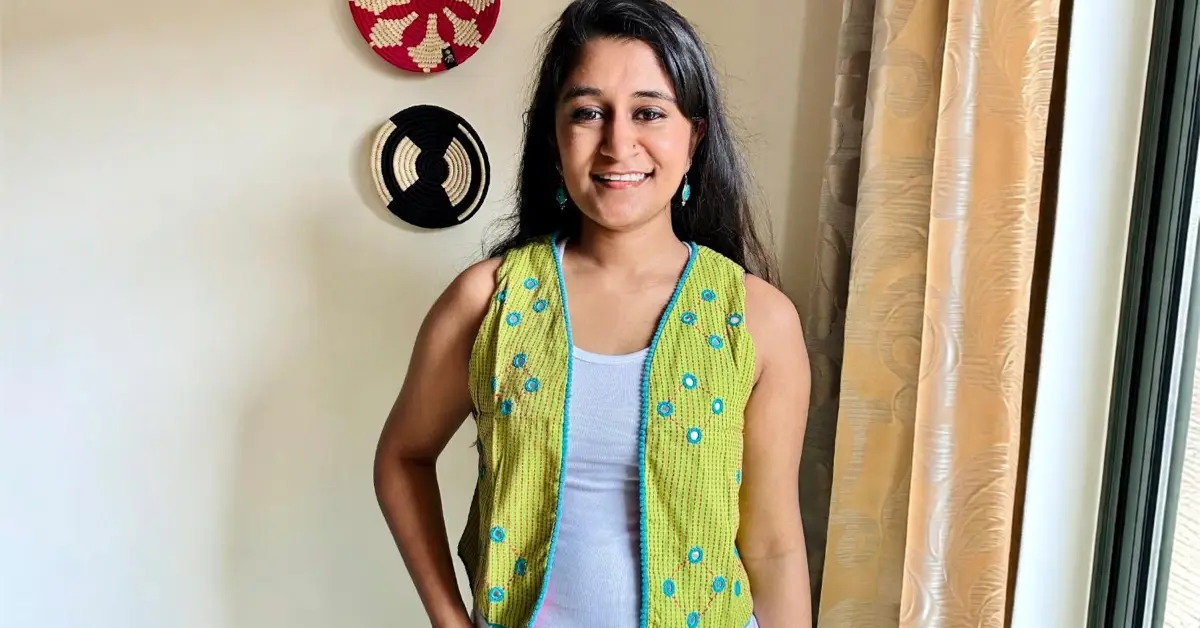
IndiKhoj, a two-year-old Indian textile label, had no plan to sell corsets. Founder Anoushka Upadhyaya wanted to build a small, focused brand around handblock shirts, then dresses, and stay there. One custom piece for a friend changed that, and the corset is now the product most customers find the brand through.
The label has raised no outside money. It ships 200 to 300 orders a month, and between 20% and 30% of buyers return to shop again, Anoushka told LAFFAZ.
The corset nobody planned
The friend was heading to a fashion show and wanted to wear Indian textiles with a modern twist. Anoushka made her a corset in Banarasi brocade, which the friend paired with trousers.
“I posted her pictures on our social media and got a massive response, which was unexpected,” Anoushka said, speaking to LAFFAZ. A collection followed, and it quickly became IndiKhoj’s bestseller.
She is wary of letting one product define the label. “The corset was never meant to be the whole brand,” she said. “Our larger idea is the textiles and art of India, not the silhouette.”
Silhouette first, craft second
IndiKhoj’s customers are mostly women between 22 and 35, a mix of millennials and Gen Z. Mumbai is a strong market, and most orders come from Bengaluru, Hyderabad and Delhi, all tier-1 cities. Interest from Indians abroad has pushed the brand toward international shipping, which Anoushka says will start soon.
The more interesting finding is why they buy. IndiKhoj was founded on a question about why Indians don’t wear Indian textiles, and her answer after two years cuts against the obvious pitch.
“What has surprised me is that people aren’t necessarily buying because they are looking for traditional Indian textiles but buying because they like the silhouette first and then discovering that the fabric is handwoven or handcrafted,” Anoushka said.
Funding handloom without a cheque
Handloom is a cash-hungry business. Weavers and suppliers expect payment before a single garment is sold, and for a founder without investors, that is where the pressure lands.
“We haven’t raised any outside funding. IndiKhoj has been completely bootstrapped, so every collection has been funded through our savings and reinvesting what the business earns,” Anoushka said.
She named upfront fabric payments as the tightest point in the cash cycle. “Most weavers and suppliers require upfront payment from us, long before the products are sold.”
The brand’s response has been to keep batches small. “Being bootstrapped has made us very conscious about producing in smaller batches, observing the response and then scaling on the bestsellers,” she said.
Production is outsourced. “We have outsourced our manufacturing and not kept any in-house production team,” Anoushka said in her written responses to LAFFAZ. That has saved the cost of setting one up, she added, and she expects to revisit the decision as orders grow and funds allow.
On pricing, she described working backwards from the real cost of a piece: fabric, tailoring, trims, packaging, shipping, returns, RTOs, and the time that small batches demand. A margin goes on top, set so the business stays sustainable while artisans and tailors are paid fairly.
Where the fabric comes from
IndiKhoj sources from handloom weavers, handblock printers, embroidery workers and fabric suppliers. Anoushka met most of them at craft fairs or by visiting the villages where the crafts are practised.
The clusters include Kutch for Ajrakh, Odisha for Sambalpuri, Telangana for Ikat, Rajasthan for handblock printing, Bhagalpur for silk, Andhra Pradesh for Kalamkari and Maheshwar in Madhya Pradesh for Maheshwari. Where she can, she works directly with artisans and artisan-led workshops. Smaller quantities sometimes come through local suppliers who work closely with them.
Fixing fit, one exchange at a time
Fitted garments are notoriously hard to sell online, and IndiKhoj’s early corsets taught Anoushka that the hard way. Every exchange request started with a detailed call to find out where the fit had failed. Those calls fed into a size chart, and she now helps hesitant customers pick a size over WhatsApp.
Because each batch is small, she can trace exchanges back to specific causes and adjust the next run. The brand says this has cut its return rate “a lot”.
Growth without a big ad budget
Instagram is the main discovery channel, driven by reels, customer-generated content, founder-led posts and creator collaborations. Larger creators approached the brand on their own after spotting the product. IndiKhoj now runs Meta ads as well, but cost per purchase varies by product and campaign, and Anoushka reads those numbers next to organic sales.
“For a small brand like ours, a customer sharing the product with someone else can be much more valuable than an ad impression,” she said.
What comes next
A trouser collection in Kalamkari silk and Banarasi brocade is in development. The label is also eyeing regions it has not worked with yet, including Kunbi textiles from Goa. “The challenge is to keep finding silhouettes that feel current without changing the character of the textile,” Anoushka said.
The team is small. One member packs and manages orders. The first role Anoushka wants to fill is a content and social media owner, someone who handles ideas, shoots, editing, and trend-spotting as well as posting. She still spends much of her own time there.
Handing over control is the harder part. “The hardest thing to let go of has been the creative control,” she said. She wants her own hours back for product, sourcing, and the larger brand vision.