Opendoor Technologies shut down its entire India operations on June 11, letting go of nearly 250 employees it had hired less than two years ago to manage backend workflows — and CEO Kaz Nejatian made no attempt to obscure the reasoning behind it.
In a note he posted publicly on X, Nejatian said the company had spent months moving select roles back to the United States and that the India exit was the final step in that transition. “Today we began to say goodbye to our colleagues in India as we wind down our India operations,” he wrote. “Our customers are in America, and the operational work we do for them is best done close to them.”
The India team — based across Chennai and Bengaluru — had been built to handle manual workflows across what Nejatian described as fragmented internal systems. Once those systems were unified and AI tooling was deployed across US-based teams, the company no longer needed an offshore workforce to fill the gaps those systems had previously created.
Opendoor confirmed it would pay transition packages to affected employees, covering severance, outplacement services, and other resources. A small subset of team members was asked to stay on briefly to complete the handover of key workstreams.
The announcement landed at a sensitive moment for India’s technology services sector. The country is now the world’s largest Global Capability Center market, with more than 2,100 GCC units employing roughly 2.36 million people and generating close to $100 billion in annual revenue, according to Reuters. Opendoor’s exit, while modest in isolation, immediately drew comparisons to a structural shift that many in the industry have been bracing for.
Phil Fersht, chief executive of outsourcing research firm HFS Research, in a statement, said that the real story is not jobs moving from India to the US, but AI reducing how much operational labor companies need at all. “This is not an isolated restructuring,” he said. “It is part of a much broader pattern we are starting to see as companies redesign operations around AI, automation, and much leaner workflows.”
On X, reaction from investors was swift. Sheel Mohnot, co-founder of Better Tomorrow Ventures, wrote that as manual work gets replaced by AI, a significant number of jobs will be lost in India. Keshav Lohia of Emergent Ventures called it a “watershed moment,” arguing that AI is beginning to chip away at the cost-arbitrage logic that underpinned decades of offshoring to India.
The context for Opendoor’s restructuring matters. The company has been through a bruising stretch. Securities filings show its global headcount fell from 1,470 at the end of 2024 to 1,042 by the end of 2025, with its non-US workforce shrinking from 342 to 184 over the same period — long before the India wind-down was announced. The US housing market’s prolonged slump hit iBuying platforms especially hard, and Opendoor has been cutting costs across every function.
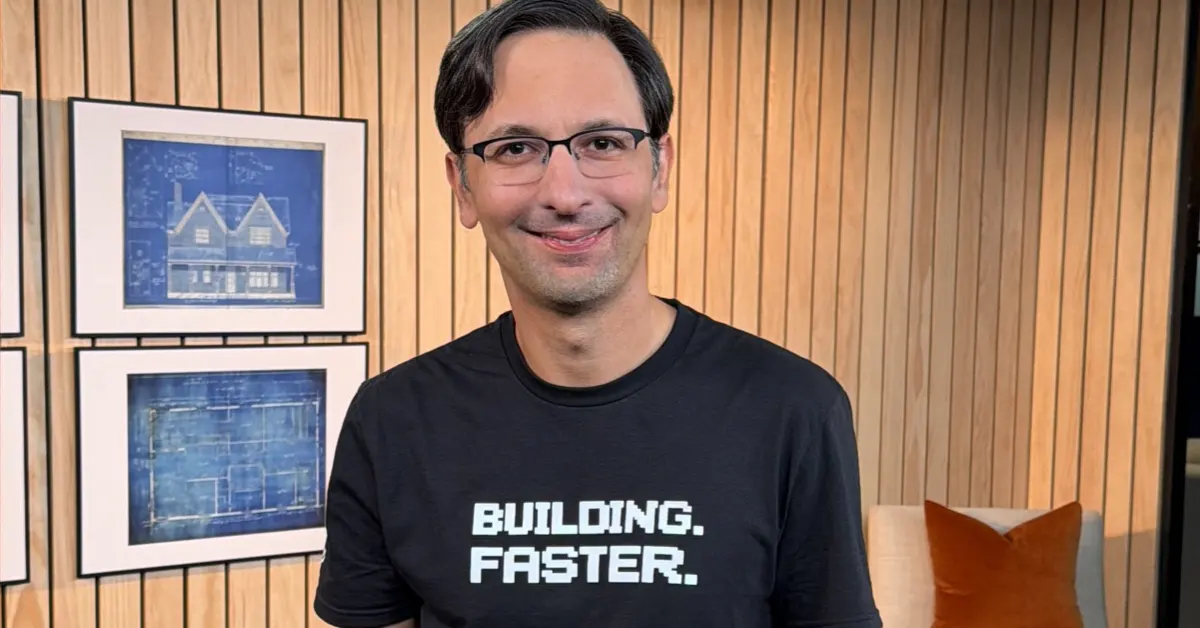
Nejatian only joined as CEO in September 2025, brought in from Shopify, where he served as Chief Operating Officer. Co-founders Keith Rabois and Eric Wu returned to the board alongside him, with Rabois taking the chairman role. He had been blunt from day one about his intentions: in an early CNBC interview, he described the company as “completely bloated” and said it didn’t need more than 200 of its then-1,400 employees.
What Nejatian is calling “Opendoor 2.0” is a leaner, AI-native operation built around smaller US-based teams with broader individual ownership and fewer layered manual processes. Whether that transformation produces a profitable company remains an open question — Opendoor’s contribution margin recovered to 4.4% in Q1 2026 from a low of 1.0% in Q4 2025, and management has guided for the 5–7% target range in Q2 2026, per SEC filings. But GAAP losses remain, and the housing market has not recovered.
For India’s tech workforce, the question Opendoor has put on the table is harder to answer: if AI can unify the fragmented systems that created offshore work in the first place, what replaces it?