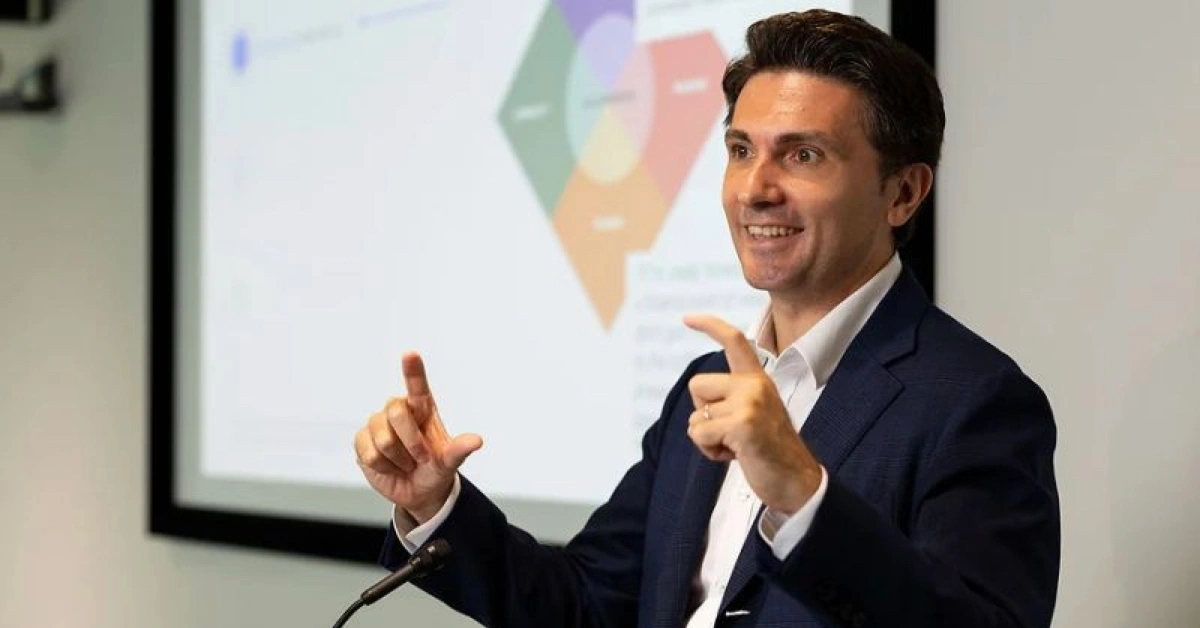
In a recent post on X (formerly Twitter), Roberto Croci, Senior Director of Value Creation & Transformation at Saudi Arabia’s Public Investment Fund (PIF), shared his views on hustle culture in the startup ecosystem.
In it, Croci recounts a conversation with a 22-year-old who had just joined a billion-dollar startup. On his very first day, HR set the tone:
“We’re a hustle culture. Expect to work 10–12 hours a day, no weekends. This will give you experience no other company can.”
What followed was less a motivational pitch and more a reality check—one that highlights a broader pattern across high-growth startups today.
The post comes amid increasing global conversations around burnout, layoffs, and work culture in startups.
The normalization of overwork
Croci didn’t frame the incident as an outlier. Instead, he pointed to something far more systemic:
“They brag about their billion-dollar valuation like it’s a medal. Meanwhile, the people actually doing the work are exhausted and nobody seems to notice.”
The post resonated because it captured a contradiction many young professionals are quietly experiencing:
- Startups celebrating valuation milestones publicly
- While employees absorb increasingly intense workloads privately
What was once considered “early-stage grind” is now being institutionalized—even in well-funded, late-stage companies.
Hustle culture or structured burnout?
The language used in that onboarding conversation is telling:
- “Hustle culture”
- “10–12 hours a day”
- “No weekends”
- “Experience no other company can offer”
Individually, these phrases might sound like ambition. Together, they raise concerns about how overwork is increasingly being framed as a normal—or even desirable—part of startup culture.
This is where the narrative shifts.
Because what’s being sold to employees—especially younger ones—isn’t just a job. It’s a promise of accelerated growth, often in exchange for:
- Personal time
- Mental health
- Long-term sustainability
And crucially, without a corresponding increase in compensation or ownership.
Also Read: Dell cuts 11,000 jobs as AI spending rises — inside the Big Tech layoff playbook
Why young employees are the most exposed
The 22-year-old in Croci’s story is not incidental. Early-career professionals are particularly vulnerable to this model:
- They are more likely to equate struggle with success
- More willing to trade boundaries for opportunity
- Less likely to push back against authority early on
Startups, intentionally or not, leverage this dynamic.
The result? A workforce that is:
- Highly motivated
- Deeply invested
- And increasingly exhausted
From growth pressure to human cost
Croci’s post also opens the door to a more uncomfortable question:
What is the real cost of growth in today’s startup economy?
Behind every:
- Funding announcement
- Valuation milestone
- Expansion headline
There is an internal push for:
- Faster execution
- Higher output
- Leaner teams doing more
In many cases, this translates into extracting more productivity per employee, rather than expanding teams proportionally.
And when conditions tighten—as seen across recent layoffs globally—the same employees often face:
- Job cuts
- Role redundancies
- Or silent burnout exits
The illusion of the “learning opportunity”
One of the most powerful lines in the onboarding pitch was this:
“This will give you experience no other company can.”
It reflects a broader shift in how work is being framed.
Instead of competing on:
- Compensation
- Stability
- Work-life balance
Many startups are now competing on:
- “Learning”
- “Exposure”
- “Speed of growth”
While these are valuable, they can also become justifications for unsustainable expectations.
In effect, companies are increasingly trading future promise for present effort, a trend that highlights shifting expectations between employers and employees.
Why this conversation is gaining traction now
Croci’s post is not emerging in isolation. It sits at the intersection of several ongoing shifts:
- Post-pandemic re-evaluation of work-life balance
- Rising awareness of burnout and mental health
- Increased scrutiny of startup work cultures
- A wave of layoffs is forcing employees to rethink loyalty vs self-preservation
Together, these forces are pushing professionals to ask:
Is “hustle” still worth it—and at what cost?
A quiet shift in employee mindset
Perhaps the most important change is not happening inside companies—but among employees themselves.
There is a growing recognition that:
- Burnout is not a badge of honor
- Overwork is not always a shortcut to success
- And “experience” should not come at the cost of well-being
Croci echoes this sentiment clearly:
“Don’t fall for it. Take breaks, protect your mental health, and know the line between work and life.”
In Summary
As startups continue to chase scale, the question is no longer just how fast they can grow—but how sustainably they can do it.
Because behind every billion-dollar valuation, there are people doing the work, and their mental health is imperative.
Also Read: Sam Altman’s Tweet Sparks Layoff Fears — Here’s How People Are Reacting