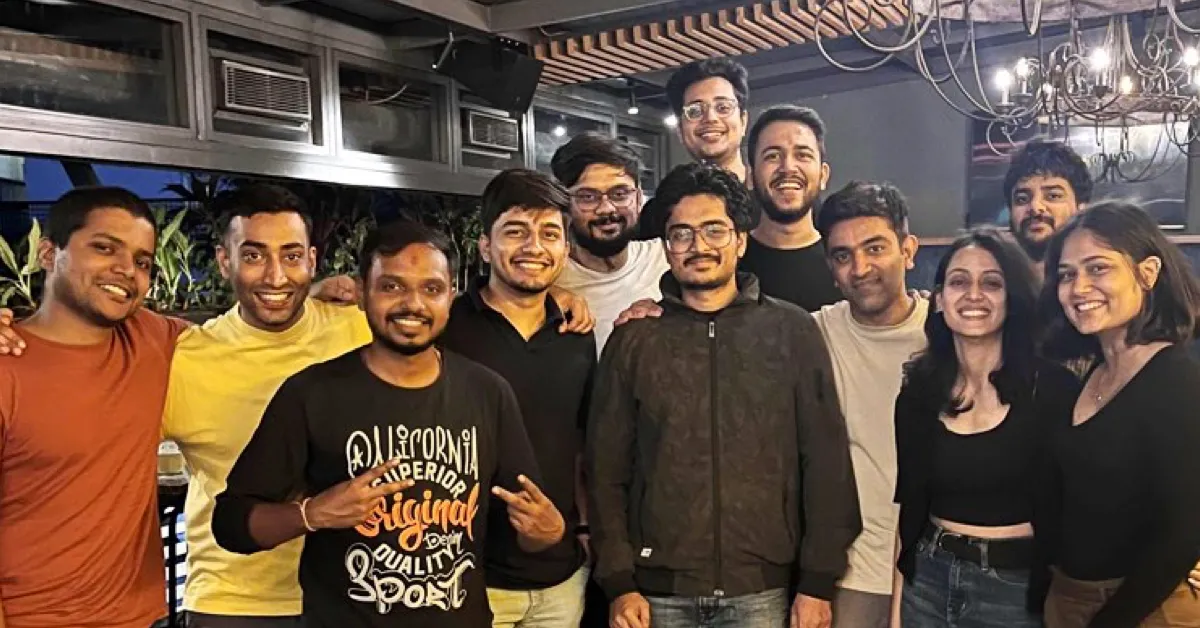
Spill Games, a Bengaluru-based mobile gaming studio, has raised $3.1 million in a seed funding round co-led by Centre Court Capital and PeerCapital. The fresh capital brings its total fundraising to approximately $3.85 million, following a $750,000 pre-seed round from All In Capital, M-League, and angel investors closed in December 2024.
The startup, co-founded in July 2024 by Om Misra, Tapan Ranjan, and Harsh Garg, builds casual and puzzle mobile games for a global audience. Proceeds from the seed round will be used to scale its portfolio of live and upcoming titles, deepen its internal technology stack, and selectively grow the team.
Spill Games operates a proprietary in-house engine called Spillway, which it says allows the company to modularise development across analytics, retention, monetisation, and live operations — enabling new titles to ship roughly 4x faster than a traditional studio workflow. The company currently has five live games, with three having reached positive unit economics.
Mobile gaming globally is projected to exceed $107 billion in revenue in 2026, according to market research cited by the company. Within that, casual and hybrid-casual formats have emerged as the most capital-efficient entry points for new studios, given lower development costs and broad demographic appeal. Indian gaming startups have increasingly attracted early-stage institutional capital as investors look to back studios that can punch above their weight through proprietary tooling rather than marketing spend.
Statista projects global mobile games revenue to reach $134.22 billion in 2026, making it the largest segment in the overall gaming industry. Spill Games’ bet on an in-house engine — rather than relying on off-the-shelf platforms — places it closer to a technology company than a traditional game studio, a positioning that typically commands better multiples at later stages.
Most early-stage studios burn cash testing concepts; Spill Games’ Spillway engine is designed to compress that cycle. The plan to test 20-plus prototypes over the next 18 months is aggressive but internally consistent with that model. The more interesting question is whether the studio can maintain capital efficiency as it moves into hybrid-casual and in-app purchase formats, which require deeper content investment than the ad-led model that currently drives its revenue. Competitors like Tripledot Studios and Playrix scaled precisely by owning this transition.