On April 15, 2026, a document began circulating on social media. It was titled Lenskart Staff Uniform and Grooming Guide — version 1.1/11 — and it was dated February 2, 2026. Page 7 of the document stated that store employees were not permitted to wear visible religious marks, including bindi, tilak, and kalawa. The same document explicitly allowed hijab and turban. Within hours, #BoycottLenskart was trending on X (formerly Twitter). What followed over the next seven days became one of the most significant corporate controversies in India’s startup and retail space in recent memory.
What the Document Said
Lenskart operates over 2,400 stores across India and went public in January 2026 in an $828 million IPO on Indian exchanges. As the country’s largest eyewear retailer, it employs thousands of frontline staff. The leaked style guide was a grooming and uniform manual for in-store employees. According to the document that circulated — which carried Lenskart’s branding and was version-stamped with a February 2026 date — wearing a bindi or tilak was not permitted. Kalawa, the sacred thread worn on the wrist by many Hindus, was also listed as restricted. The hijab and turban, by contrast, were permitted.
The asymmetry struck a nerve instantly. Social media users began sharing the pages widely, and criticism mounted quickly across political and cultural lines. Many called it religious discrimination in a workplace setting. Others questioned how a company founded by a Hindu, selling to a predominantly Hindu customer base, could enforce such a policy.
Peyush Bansal’s Changing Response
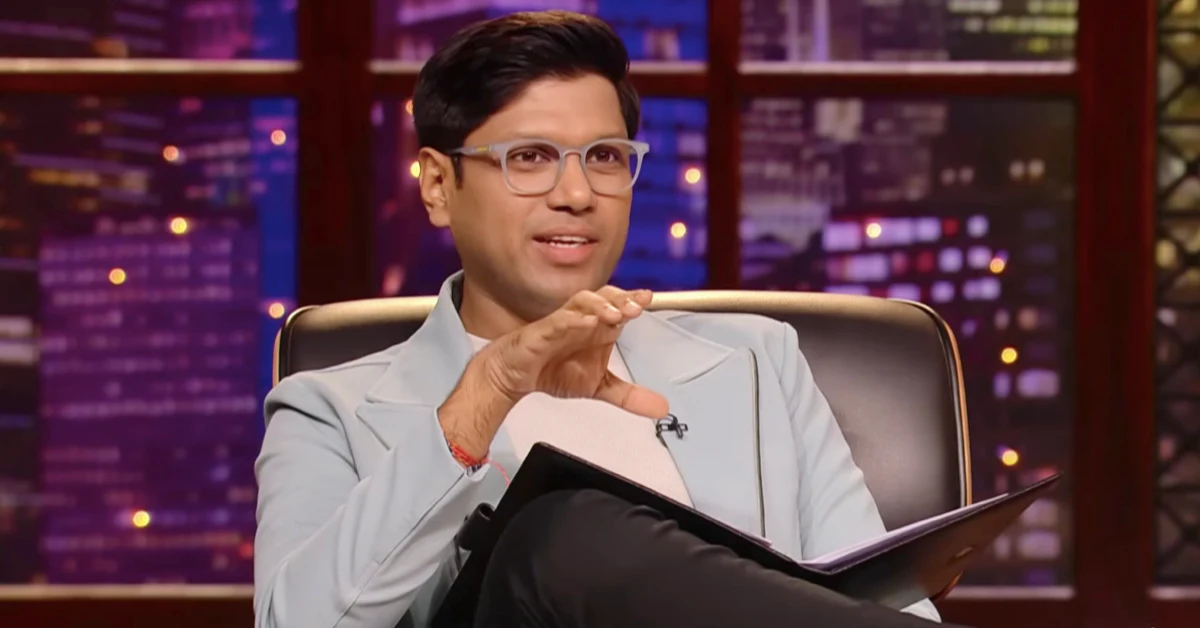
On the night of April 15, Peyush Bansal — Lenskart’s co-founder and CEO, and a judge on Shark Tank India — posted on X. He described the viral document as “inaccurate” and said it did not reflect the company’s current policy. He wrote that Lenskart has “no restrictions on any form of religious expression, including bindi and tilak” and that “outdated versions do not represent who we are today.”
That response immediately ran into a problem. A community note on X flagged that the document in question was version-stamped February 2, 2026 — not years old, not outdated. It was, by any reasonable reading, a current document. The community note directly challenged the “inaccurate” and “outdated” framing.
Bansal issued a second statement. This time, he shifted his position. He acknowledged that the document was a real internal training document — not an external forgery — and that it contained an “incorrect line about bindi/tilak that should never have been written.” He said that when the company discovered this on February 17, it was removed. He added: “As Founder and CEO, the responsibility for such lapses is mine.” He committed to a stricter review of all internal training materials going forward.
The shift from “inaccurate document” to “incorrect line we already removed” created a new problem: if it was removed on February 17, why was a February 2 version still being distributed to staff and showing up during employee training weeks later?
The Employees Who Came Forward
The controversy did not remain abstract. Two former employees gave public accounts that added significant weight to the allegation that the policy was not just a paperwork error — it was being actively enforced.
Akash Falake, a store manager who worked at a Lenskart outlet in Pune, shared emails with publication OfficeChai showing he had flagged the policy to the company’s HR team in writing on November 25, 2025, and again on December 8. He described how, through January and February 2026, store audits were penalising employees who wore bindis or tikas — with marks deducted from store ratings, which affected both employee ratings and manager evaluations. He escalated the matter to Lenskart’s legal team without a response. On February 20, he filed a complaint on Maharashtra’s government grievance portal. He claims he was terminated the same day.
Zeel Soghasia, a trainee from Surat, gave a video account of a separate experience. He said he attended a Lenskart interview in Surat with no mention of religious symbol restrictions. He then travelled to Navi Mumbai for professional training. On his second day, he alleges that management told him he would need to cut his shikha and remove his tilak-chandlo to keep his position. He refused. He says he was dismissed the following day.
Two people. Two cities. Two different experiences — one a long-serving manager, one a new trainee — both arriving at the same claim: that the restriction was not a forgotten line in a training doc, but a policy that was being applied to real employees in real stores.
What Happened on the Ground
The controversy moved offline fast. In Surat, Gujarat — the hometown of Soghasia and a city with significant Hindu organisational presence — protests erupted outside Lenskart stores. Bansal’s effigy was burned by demonstrators who carried posters labelling him a “Hindu Virodhi” (Hindu oppressor). Viral videos showed groups entering Lenskart stores and applying tilak to staff as a symbolic act of defiance against the alleged policy. Some customers smashed their Lenskart glasses and filmed themselves returning the broken frames to store counters. A significant number of users publicly cancelled purchases and subscriptions.
On April 21 — after the company had already released its new style guide — another wave of videos emerged showing Hindu deities reportedly placed in lower cupboards or at foot level inside Lenskart stores. Hindu activists confronted store staff in those videos, and fresh boycott calls followed.
What Lenskart Changed
On April 18, three days after the controversy broke, Lenskart published a new In-Store Style Guide publicly on its website. The document was explicit. It listed bindi, tilak, sindoor, kalawa, mangalsutra, kada, hijab, and turban — and stated that all of these are welcome, “not as exceptions. As who we are.” The company said: “If any version of our workplace communication caused hurt or made any of our team members feel that their faith was unwelcome here, we are deeply sorry. That is not who Lenskart is, and it is not who we will ever be.”
The statement described Lenskart as a company “built in Bharat, by Indians, for Indians” and committed to ensuring all future policies, training materials, and internal communications reflect these values.
The Market Impact
Lenskart had listed on Indian exchanges in January 2026 at ₹402 per share, making it a publicly traded company for the first time. Its IPO was oversubscribed but debuted at a discount, closing on listing day around ₹392. By the time the dress code controversy peaked, the stock had already been under pressure.
Between April 15 — when the document went viral — and April 21, Lenskart’s shares fell approximately 7.5%. Given the company’s market capitalisation at the time, that translated to a loss of roughly ₹7,000 crore in value over five trading days. Whether that drop was driven primarily by the controversy or by broader market conditions remains debated among analysts. Some market watchers noted the Nifty was up on some of those same days, making Lenskart’s underperformance stand out.
What This Tells Us About Corporate India
The Lenskart controversy is not just a story about one company’s dress code. It landed in a moment when questions about religious identity in corporate India are unusually charged — set against a national backdrop of debates about workplace culture, institutional neutrality, and what fairness looks like in a diverse workforce.
What made this particular episode escalate so quickly was not just the policy itself, but the gap between the initial response and the documented reality. A company does not lose ₹7,000 crore in market cap over a single viral post — it does so when the corporate response fails to match what the evidence shows. Bansal’s first statement called the document “inaccurate.” A community note established it was a February-dated and company-branded. His second statement acknowledged the document was real, but said the problematic line was removed two months earlier. Former employees said that removal did not stop the policy from being enforced in their stores.
Lenskart has now committed to a fully inclusive policy in writing, made it public, and accepted accountability at the founder level. Whether that commitment holds — and whether the employees who say they were fired for refusing to comply receive any response from the company — will be watched carefully. For now, what began as an internal training document on page seven of a grooming manual has become a case study in how quickly workplace policies can become national stories when the gap between stated values and documented practice becomes visible.