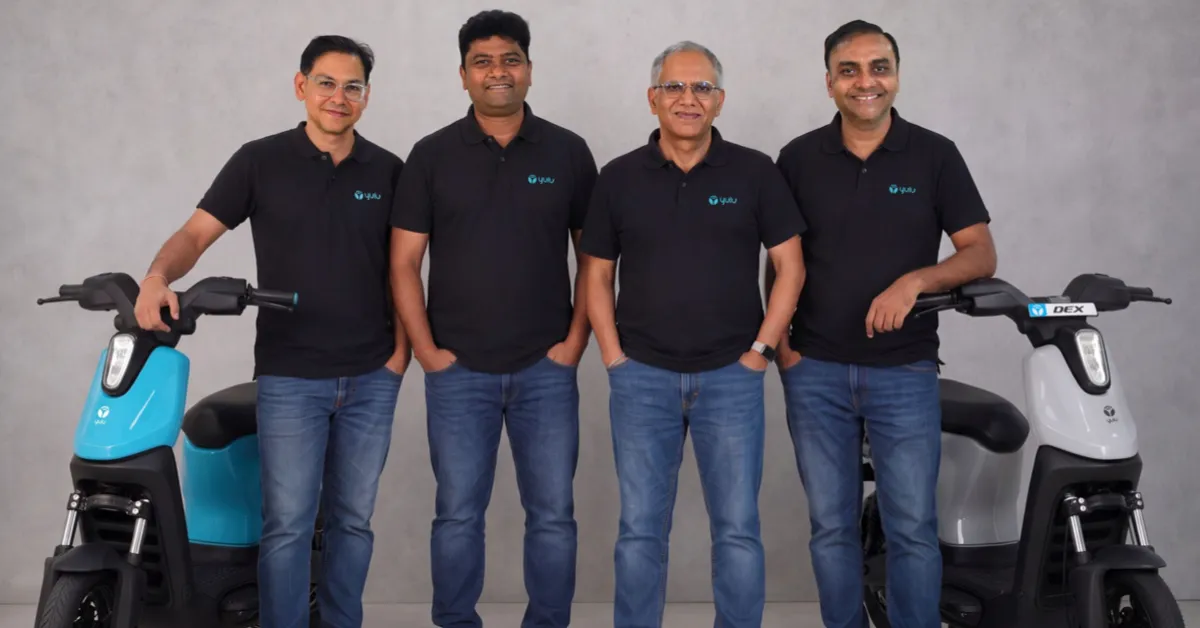
Bengaluru-based electric mobility-as-a-service platform Yulu has raised $93 million in a Series C round combining $63 million in equity, led by GEF Capital Partners, with $30 million in debt. The round, announced on 12 August 2026, is reported to value Yulu at about $170 million post-money; chief executive Amit Gupta declined to confirm the figure but did not dispute it. About $5.5 million of the equity bought out early seed investors nearing the end of their fund life, rather than flowing into the business, Gupta said, and existing strategic backers Bajaj Auto and Magna International did not participate, waiving their pre-emptive rights to let GEF acquire its target stake.
The round lands as shared electric two-wheelers have found a job well beyond urban commuting: the delivery layer under India’s ten-minute grocery boom. Yulu’s vehicles now handle more than 750,000 doorstep deliveries a day and account for over 15 percent of quick-commerce deliveries across India’s four largest metros, turning what began as a shared-bike service into logistics infrastructure for platforms like Blinkit, Zepto and Swiggy Instamart. The company owns its roughly 50,000-vehicle fleet outright and rents it out by the day or trip, an asset-heavy model in which battery swapping through Yuma, its joint venture with Magna, keeps vehicles earning instead of charging — and explains why $30 million of this round arrived as debt rather than equity, since fleet financing is typically cheaper than selling shares.
Founded in 2017 by Amit Gupta, RK Misra, Naveen Dachuri and Anuj Tewari, Yulu has now raised more than $228 million since inception, including an $82 million Series B led by Magna in September 2022 and $19.25 million from Magna and Bajaj in February 2024. The fresh capital is earmarked to quadruple the active fleet to 200,000 electric vehicles over two years, expand into new urban-mobility use cases including a higher-payload scooter for e-commerce parcels, and prepare the company for a potential public listing. Operating revenue nearly doubled to ₹237.4 crore in FY25 from ₹119.9 crore in FY24, and Yulu says it has been EBITDA-positive since April 2025, even as it posted a ₹126 crore net loss for the year, down 12 percent from the prior year.
The terms complicate the growth story the fleet numbers tell. A reported post-money of about $170 million, nine years after founding and against more than $200 million raised, looks flat to down measured against valuations ascribed to Yulu in 2025, and a round partly used to buy out early investors while two strategic backers sat out is consistent with a deal structured for a new entrant and an exit for old ones, whatever the framing. What Yulu has that few mobility peers can claim is a genuine operating turn: positive EBITDA, near-doubled revenue and a captive, if concentrated, demand source in quick commerce. The risk sitting underneath is that same concentration — a handful of cash-burning delivery platforms could bring logistics in-house or squeeze rates — colliding with the capital intensity of quadrupling a fleet before the business converts EBITDA breakeven into sustained net profit.