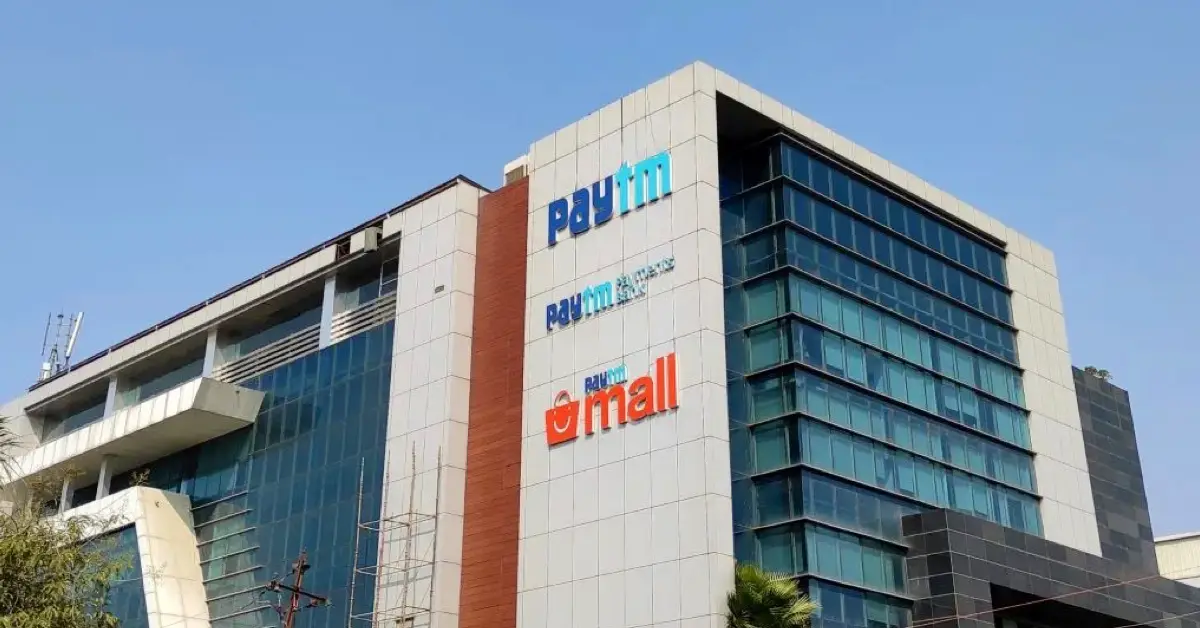
India’s payments banking experiment has run its course — at least for Paytm. On April 24, the Reserve Bank of India cancelled the banking licence of Paytm Payments Bank Limited (PPBL) under Section 22(4) of the Banking Regulation Act, 1949, with immediate effect. Paytm notified in a press release on Friday, 24 April. The central bank said it will approach the High Court to begin winding-up proceedings, marking the most decisive regulatory action taken against a payments bank in the country.
The RBI’s order was direct: the bank’s operations were conducted in a manner detrimental to the interest of depositors, and the general character of its management was found prejudicial to both depositor and public interest — specific grounds under Sections 22(3)(b) and 22(3)(c) of the Banking Regulation Act. The regulator concluded that no meaningful public purpose would be served by allowing the bank to continue.
This did not come as a surprise to anyone who had been tracking the bank’s regulatory journey. Scrutiny of Paytm Payments Bank dates back to 2018, when an RBI audit uncovered significant gaps in KYC compliance. Key violations included linking a single PAN to multiple customer accounts and allowing transactions beyond prescribed limits — raising concerns about potential money laundering. The bank was also flagged for failing to maintain adequate separation between its operations and parent company One97 Communications. In March 2022, the RBI directed the bank to stop onboarding new customers. In early 2024, it went further — barring the bank from accepting fresh deposits, credits, or top-ups in customer accounts, wallets, and prepaid instruments. Each restriction narrowed the bank’s room to operate, and by the time the licence was pulled, PPBL had already been functionally hollowed out.
For depositors, the RBI has offered some reassurance: Paytm Payments Bank holds enough liquidity to repay its entire deposit liability upon winding up. The bank will continue limited operations in the interim — primarily to facilitate withdrawals — while the High Court oversees the resolution process.
One97 Communications moved quickly to distance itself, stating it has no financial exposure to PPBL, having written off its investment in the entity as of March 31, 2024. The company confirmed that the Paytm app, UPI, QR, Soundbox, and Payment Gateway would continue without disruption. Vijay Shekhar Sharma had held a 51% stake in the payments bank, with One97 holding the remaining 49%.
What the cancellation ultimately reflects is not a one-off governance failure but a structural mismatch. Instead of growing into a full-service bank, PPBL ran into repeated regulatory headwinds — compliance failures, KYC issues, and technology infrastructure concerns — that progressively stripped it of the ability to grow, and ultimately, to operate. The RBI’s action signals that in India’s tightly regulated financial sector, scale is not a shield. For the fintech ecosystem, that is perhaps the more lasting lesson.