San Francisco-based deep-tech startup Discovered Materials has raised $9 million (₹85 crore) in a seed round led by Lightspeed India Partners, with participation from Y Combinator and Peak XV Partners, alongside angel investors including Paul Graham, Gokul Rajaram, and Thariq Shihipar. The round, announced on 10 August 2026, is Discovered Materials’ first institutional funding, and the company has not disclosed the valuation at which it was raised.
The startup is chasing a bottleneck that has quietly become one of the AI industry’s most expensive problems. Modern AI chips shed heat at fluxes exceeding 140 watts per square centimetre, hotter than a spacecraft on re-entry, and that heat drains much of the power and water a data centre consumes. Finding thermally conductive materials that can cool 3D chip packaging has historically taken over a decade of lab work, a timeline sharply at odds with the pace of the chip build-out itself. Discovered Materials’ bet is that swarms of AI agents, built on frontier models in a custom harness, can propose thousands of candidate materials a day, with in-house physics simulations filtering them by stability and thermal performance before anything reaches a lab.
Also Read: Yulu Raises $93M Series C Led by GEF Capital
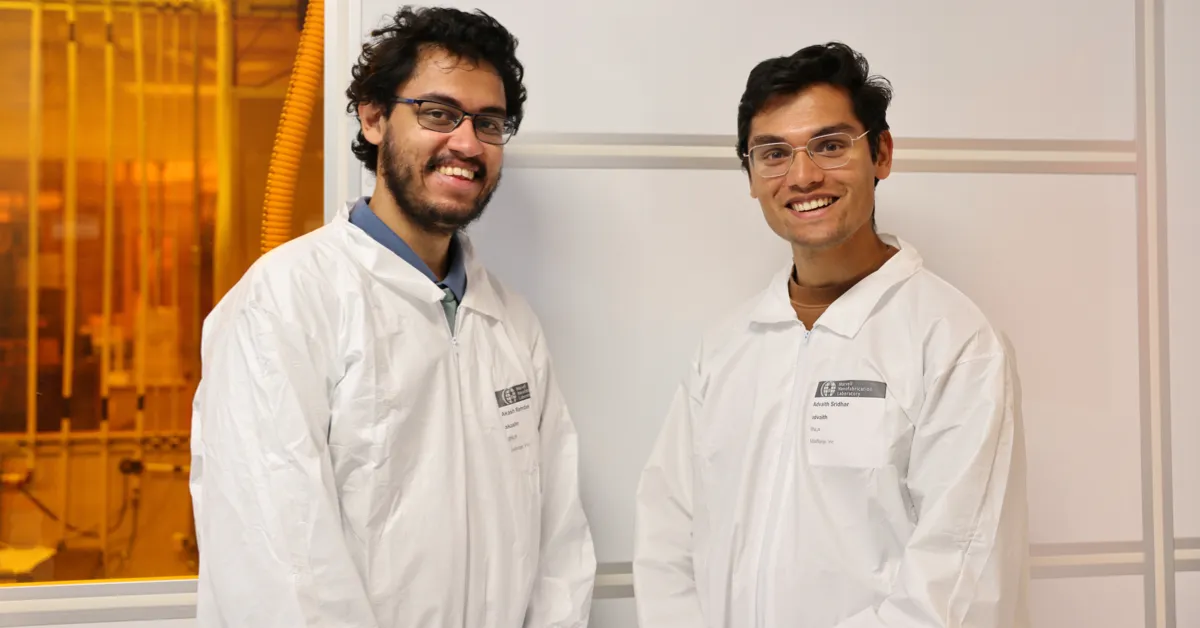
The company emerged from Y Combinator’s Spring 2026 batch, founded the same year by Akash Ramdas and Advaith Sridhar, who met more than a decade ago at IIT Madras. Ramdas holds a PhD in materials science from Stanford, where his work on nanoscale interconnects fed into roadmaps at Intel and TSMC; Sridhar, the chief executive, studied AI at Carnegie Mellon and built autonomous agents at Persona AI and Luma Labs before this. The capital raised will go toward expanding the team and laboratory and scaling the company’s research agents. Alongside the round, Discovered Materials released the Material Discovery Bench, a benchmark for how frontier AI systems perform on real semiconductor materials problems — a move that positions the young company as a party defining how the field gets measured, independent of any single model generation.
The funding does not settle the harder question. Discovered Materials is months old, pre-revenue and small, and its claim of producing thermal materials in three months that match products which took years to develop is the company’s own and remains unverified. Generating candidates fast is the part AI makes easy; validating a material in a fab and persuading a conservative chipmaker to adopt it is the multi-year, expensive part that no AI-discovered material has yet cleared commercially. The startup is also entering a field where Microsoft’s MatterGen, Google DeepMind’s GNoME and well-funded materials-AI rivals are chasing the same compression of materials discovery with considerably deeper resources, which makes its narrow focus on thermal materials for chip packaging — where one founder already carries production credibility — a sensible wedge rather than a broad bet.