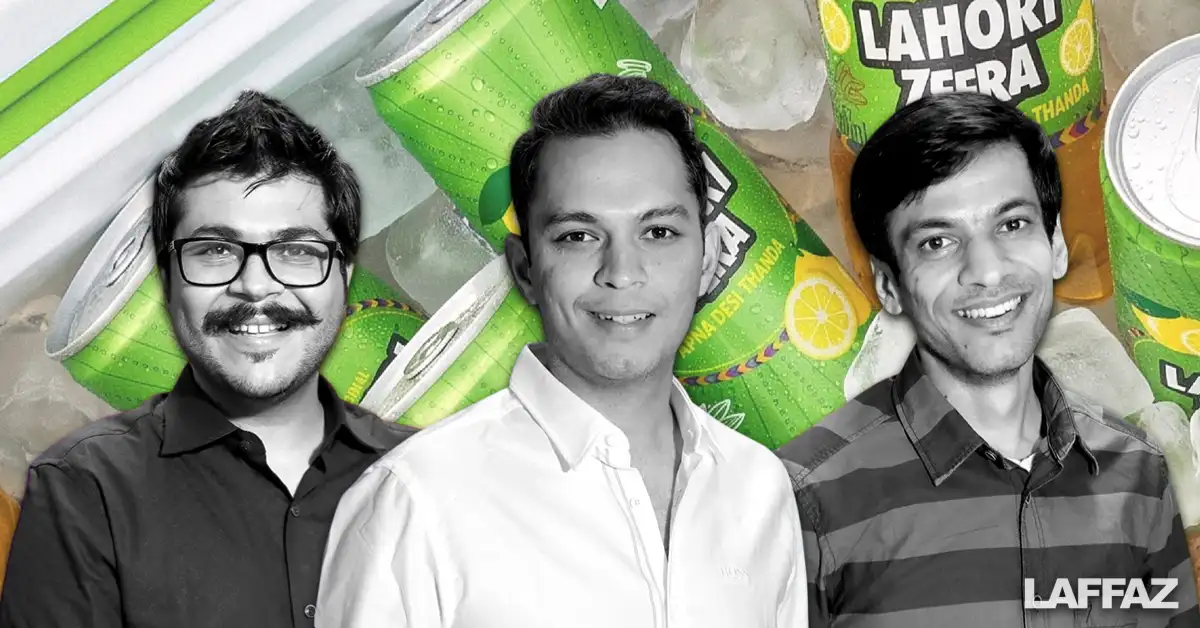
The Indian soft drink market had, for decades, operated on a simple assumption: if you wanted a carbonated drink, you were choosing between Coca-Cola and Pepsi. That assumption started cracking from a home kitchen in Chandigarh, where three cousins — Saurabh Munjal, Nikhil Doda, and Saurabh Bhutna — began experimenting with a zeera drink made from household ingredients. What started as a kitchen experiment became Archian Foods Pvt. Ltd., the Rupnagar, Punjab-based company behind Lahori Zeera — now one of India’s fastest-growing beverage brands.
The founding story is deceptively simple. Nikhil, who came from a family with a deep passion for cooking and recipe experimentation, had been tinkering with a cumin-based drink at home. When Saurabh Munjal and Saurabh Bhutna tried it, they saw something beyond a family recipe — a product that could fill a gap the big cola brands had ignored for years. The Indian market was full of mass-market carbonated drinks built on artificial flavours and international positioning. What it lacked was a brand built from the ground up around the taste memory of an Indian household — the kind of flavour that didn’t need explanation because everyone had grown up with some version of it. The cousins incorporated Archian Foods and launched commercially in 2017, with Saurabh Munjal taking the role of CEO, Nikhil Doda as COO, and Saurabh Bhutna as CBO.
The product they launched — Lahori Zeera — was deliberately mass-market in every dimension. At ₹10 for a 160ml bottle, it was priced to sit comfortably alongside the cheapest options on any general trade shelf. The name itself came from the brand’s use of Lahori namak, or rock salt, a common ingredient in the traditional desi drinks the founders were drawing inspiration from. The recipe used real spices — cumin, pepper, and black salt — rather than synthetic flavour compounds, which gave it a positioning that was both affordable and “better-for-you” by perception, without requiring a premium price point to justify it. This was the bet: that Indian consumers in Punjab, Haryana, Delhi, and UP didn’t need to be sold a lifestyle. They needed a drink that tasted like something they already knew and loved, available at the corner shop, for the same price as everything else.
Also Read: Bombay Banta Raises ₹8 Crore Pre-Series A Led by DSG Consumer Partners
The bet worked faster than most people expected. Early growth was concentrated in northern India, where the brand built dense general trade distribution — local retailers, kirana stores, and roadside stalls — rather than chasing modern trade or quick commerce. Verlinvest, the Belgian consumer-focused fund that has backed global brands including Oatly and Vita Coco, noticed the traction and invested $15 million in Lahori’s Series A in 2021, giving the brand both capital and a global institutional stamp of approval. By the time Verlinvest came in, the factory in Rupnagar was already running at scale, producing millions of bottles daily. The brand had found product-market fit in a category that most investors had written off as too commoditised to build a challenger brand in.
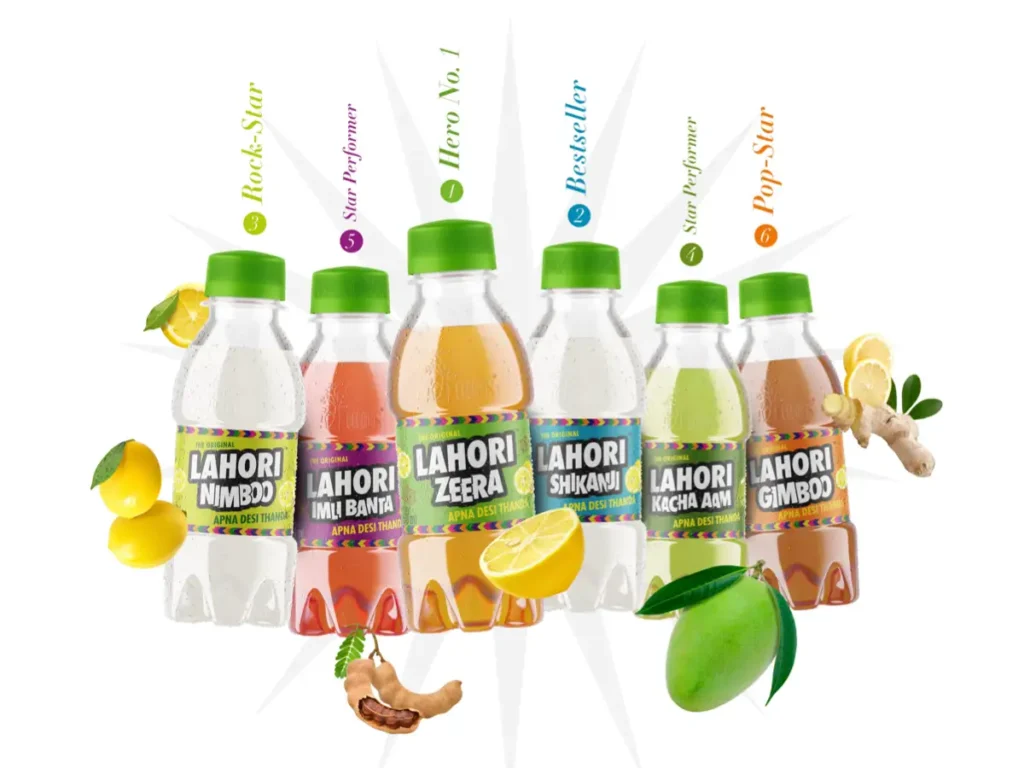
Growth through the early 2020s allowed the brand to extend its portfolio beyond its flagship. Four ready-to-drink variants now make up the core range: Zeera, Nimboo, Kacha Aam, and Shikanji — each anchored in a familiar Indian flavour, each positioned at the same accessible price point. The portfolio strategy stayed narrow and deliberate. Rather than proliferating SKUs into new categories, the founders deepened distribution of the existing range across northern India, expanding their retail footprint state by state. By 2025, the brand was reported to be present across around 18 states, with production capacity scaling to approximately 50 lakh bottles per day.
The financials reflect the pace of that expansion. According to consolidated financial statements accessed from the Registrar of Companies and reported by Entrackr, Lahori’s revenue from operations grew 73 percent year-on-year to ₹540 crore in FY25, from ₹312 crore in FY24. Total revenue, including non-operating income, stood at ₹543 crore. Net profit held flat at ₹25 crore, as the company reinvested heavily into distribution and transportation — the latter more than doubling to ₹52 crore in FY25 — to sustain the topline momentum. EBITDA margins stood at 10 percent and ROCE at 14 percent, with ₹50 crore in cash and bank balances on the books at year-end.
The capital table has grown with the business. In May 2024, Motilal Oswal’s private equity arm invested ₹200 crore into Archian Foods, in a round that valued the company at approximately ₹2,800 crore — or around $329 million post-allotment. Following the transaction, Motilal Oswal holds a 7.14 percent stake, while Verlinvest’s holding was diluted from 21.17 percent to 19.64 percent. The founding cousins collectively retained 70.76 percent of the company. Across all rounds, Lahori has raised approximately $46 million in external funding.
What the Lahori Zeera story reveals about the Indian beverage market is something the major cola companies have struggled to act on: that the largest unmet demand in the category was never for a new cola variant or an international energy drink, but for something that tasted like India at a price that everyone could afford. The cousins from Chandigarh didn’t invent a new category — they revived one that had always existed in homes and street stalls, but had never been formalised, scaled, or trusted with consistent quality. That gap, it turns out, was worth well over a thousand crore rupees.
Frequently Asked Questions
Who founded Lahori Zeera?
Lahori Zeera was founded in 2017 by three cousins — Saurabh Munjal (CEO), Nikhil Doda (COO), and Saurabh Bhutna (CBO) — under their company Archian Foods Pvt. Ltd., based in Rupnagar, Punjab.
What is Lahori Zeera’s revenue?
Lahori Zeera’s parent company, Archian Foods, reported revenue from operations of ₹540 crore in FY25, up 73 percent from ₹312 crore in FY24, according to RoC filings reported by Entrackr.
Who has invested in Lahori Zeera?
Lahori Zeera has raised approximately $46 million across three funding rounds. Its investors include Verlinvest, which led a $15 million Series A in 2021, and Motilal Oswal’s private equity arm, which invested ₹200 crore in May 2024 at a post-money valuation of approximately ₹2,800 crore.
What drinks does Lahori Zeera make?
Lahori Zeera’s current portfolio includes four ready-to-drink variants: Zeera, Nimboo, Kacha Aam, and Shikanji — all made with natural spices and priced at ₹10 for a 160ml bottle.
Where is Lahori Zeera available?
Lahori Zeera is primarily distributed through general trade — kirana stores and local retailers — across northern India, and is reported to be present in around 18 states as of 2025.